
To wash a car with ceramic coating, rinse it thoroughly first, then hand wash it in the shade using a pH-neutral car shampoo, a clean microfibre mitt and the two-bucket method, working from the roof down. Rinse off the suds before they dry, then dry the car straight away with a clean microfibre towel. Avoid brush car washes, dish soap and hot panels, and follow your coating’s aftercare instructions.
A ceramic coating makes washing easier. Dirt doesn’t grip as hard, water beads and runs off, and the paint stays glossy for longer. What it doesn’t do is make your car scratch-proof or maintenance-free. Swirl marks on a coated car usually come from the wash itself: grit dragged across the paint by a mitt, sponge or towel.
The good news is that washing a coated car properly isn’t complicated. It comes down to getting grit off before you touch the paint, using a gentle shampoo, and drying the car before the Aussie sun and hard water leave their mark. Here’s the full process, why each step matters, and the local conditions that should change how you wash.
Can you wash a ceramic coated car normally?
Mostly, yes. You use the same basic tools as you would on any car. The difference is that some everyday habits are harder on a coating: brush car washes, dish detergent, strong degreasers and letting soapy water dry on hot paint.
A ceramic coating is a thin, hard layer bonded over your clear coat. Abrasion and harsh chemicals can wear it down faster, and once it’s worn through in an area, that area loses its gloss and water-repellent behaviour. Two things set coated cars apart:
- You need less elbow grease. Dirt releases more easily, so if something won’t shift with a gentle pass, stop and soften it rather than scrubbing.
- Your coating’s instructions come first. Coatings differ in chemistry, curing and care. If an installer applied yours, their aftercare sheet takes priority over any general guide, including this one.
Let the coating cure before the first wash
A freshly applied coating needs time to cure before it’s washed or even rained on. That time varies between coating systems, the number of layers and the conditions during application, so there’s no single waiting period that suits every car. Check the label of a DIY coating, or ask your installer exactly how long to wait and what to avoid in the meantime.
What you need before you start
- A pH-neutral car shampoo that’s suitable for coated paint
- Two buckets, ideally with a grit guard in each
- At least two soft microfibre wash mitts (one for the upper car, one for the lower panels)
- A separate soft brush, mitt and bucket for wheels and tyres
- A hose with a spray nozzle, or a pressure washer with a wide fan tip (optional)
- A foam cannon or pump sprayer for pre-wash foam (optional)
- One or two large, plush microfibre drying towels, or a car blower
- A shady spot, or a cool time of day
Keep your car microfibre separate from household laundry. Lint and grit from other fabrics end up embedded in the fibres and then on your paint.
How to wash a ceramic coated car: step by step
Before you start: find shade and clean the wheels
Park in the shade, or wash early in the morning or late in the afternoon. Put your hand flat on the bonnet: if it’s hot to touch, wait. Hot panels flash-dry shampoo and water, which leaves streaks and mineral spots.
If you can, wash on grass or gravel rather than the driveway. EPA Victoria warns that washing in the driveway or street can send soap, grime and oil down the stormwater drain and into local waterways.
Then clean the wheels first, with their own brush, mitt and bucket. Wheels collect brake dust and road grime you don’t want anywhere near your paint, and doing them first means any splashback lands on paint you haven’t washed yet.
Step 1: Rinse the whole car thoroughly
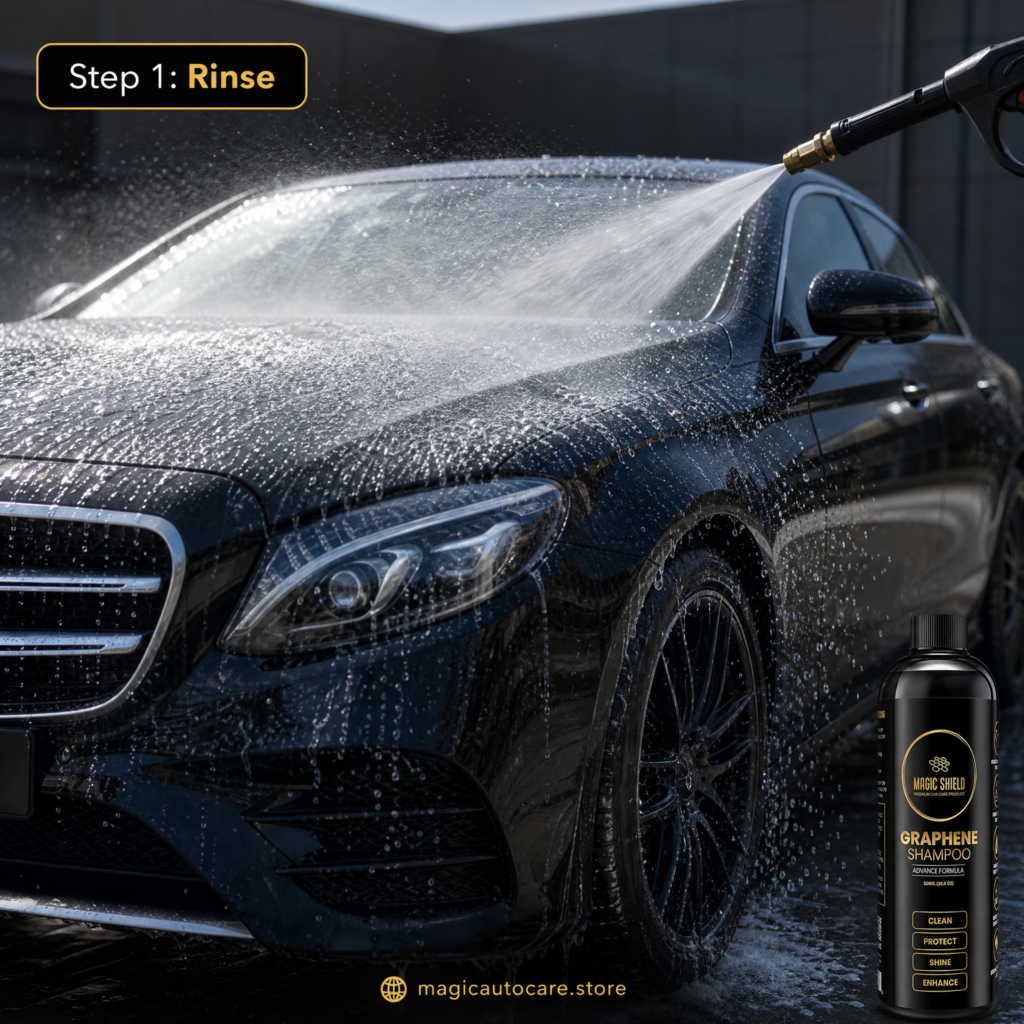
This is the most important step. Rinse from the top down and take your time on the lower doors, sills, bumpers and the areas behind the wheels, where sand and grit collect. A healthy coating lets a lot of loose dirt sheet off with water alone, and every bit of grit you remove now is grit your mitt can’t drag across the paint.
If you’re using a pressure washer, choose a wide fan nozzle, keep a sensible distance from the paint, and avoid blasting panel edges, badges, stone chips and the edges of any paint protection film.
Step 2: Foam pre-wash (optional)
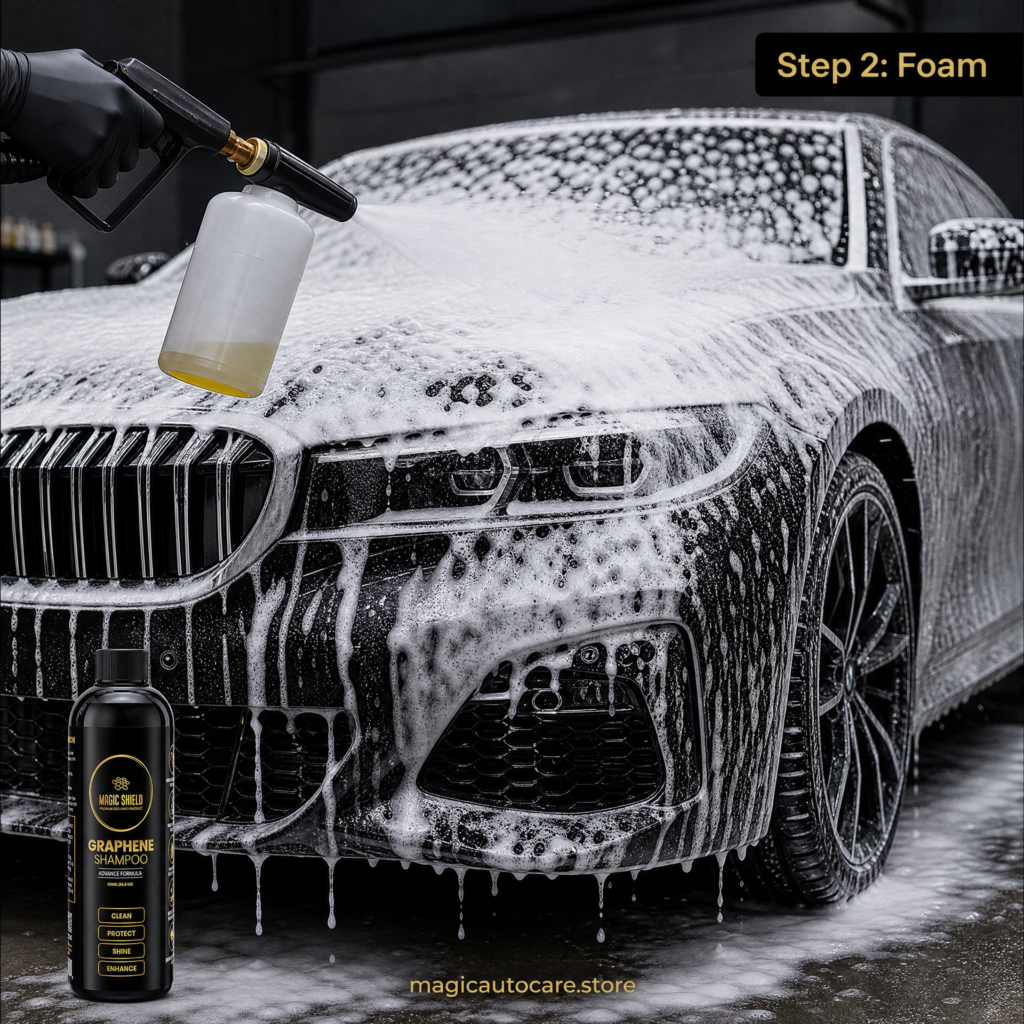
A layer of shampoo foam from a foam cannon or pump sprayer helps soften road film and bug residue before you touch the car. Let it sit briefly, never let it dry, then rinse it off. It’s useful on a very dirty car, but it doesn’t replace a careful hand wash. Only use a shampoo whose label says it suits foam application.
Step 3: Hand wash using the two-bucket method
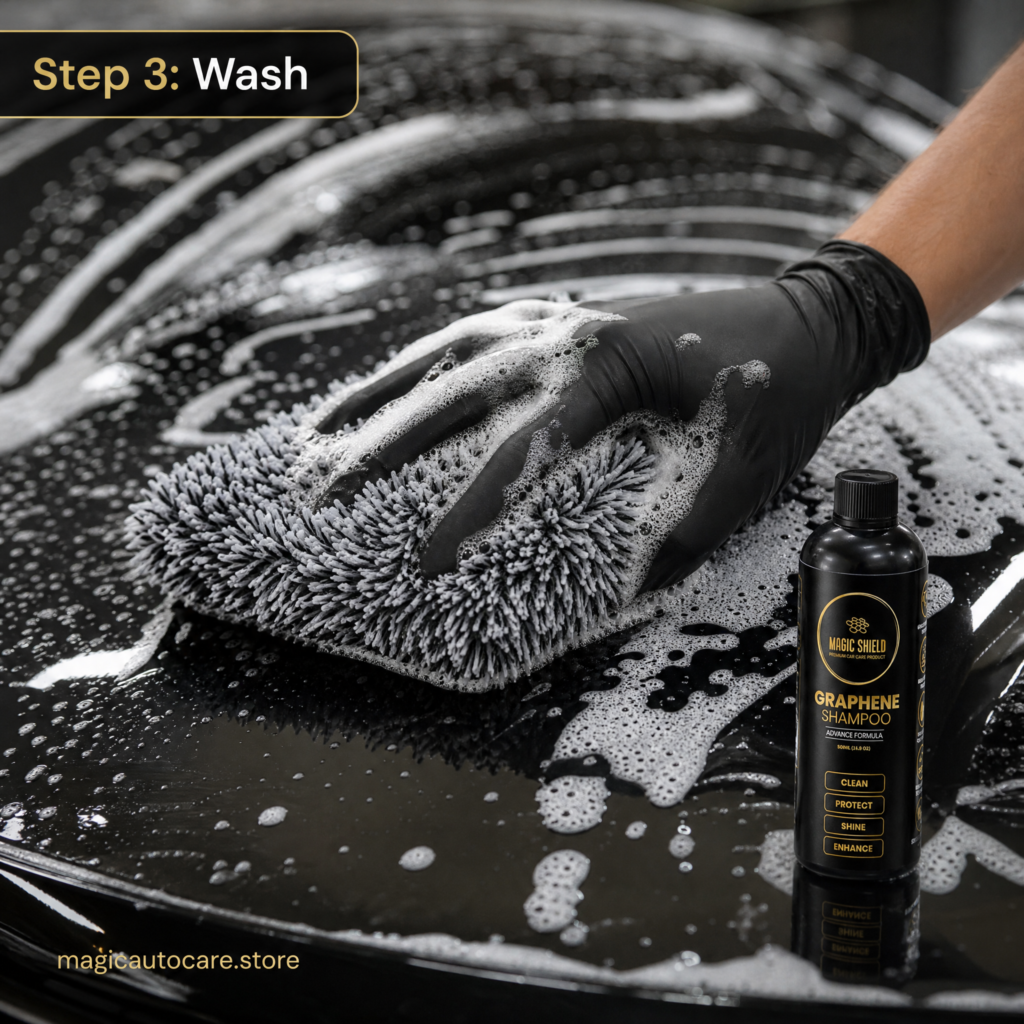
Fill one bucket with shampoo solution mixed to the label’s instructions and the other with plain water. Load your mitt from the shampoo bucket, wash one section, then rinse the mitt in the plain-water bucket, rubbing it over the grit guard, before you reload it.
Work from the top down: roof and glass, then bonnet and boot, upper doors, and finally the lower panels and bumpers. Use straight, overlapping passes with light pressure and let the shampoo’s lubrication do the work. Switch to a fresh mitt for the lower third of the car, which is always the dirtiest. If you drop a mitt on the ground, don’t put it back on the paint until it’s been thoroughly rinsed, or simply grab a clean one.
Why it matters: every pass over the paint is a chance to drag grit. Rinsing the mitt in a separate bucket keeps that grit out of your shampoo, and washing the cleanest panels first means the dirtiest grime touches the least paint.
Rinse each section before the shampoo has a chance to dry, then give the whole car a final top-down rinse. Check mirror housings, panel gaps, badges and window seals, where suds like to hide. On a coated car, a gentle, free-flowing final rinse with the nozzle off often helps water sheet away, leaving less to dry.
Step 4: Dry the car without leaving water spots
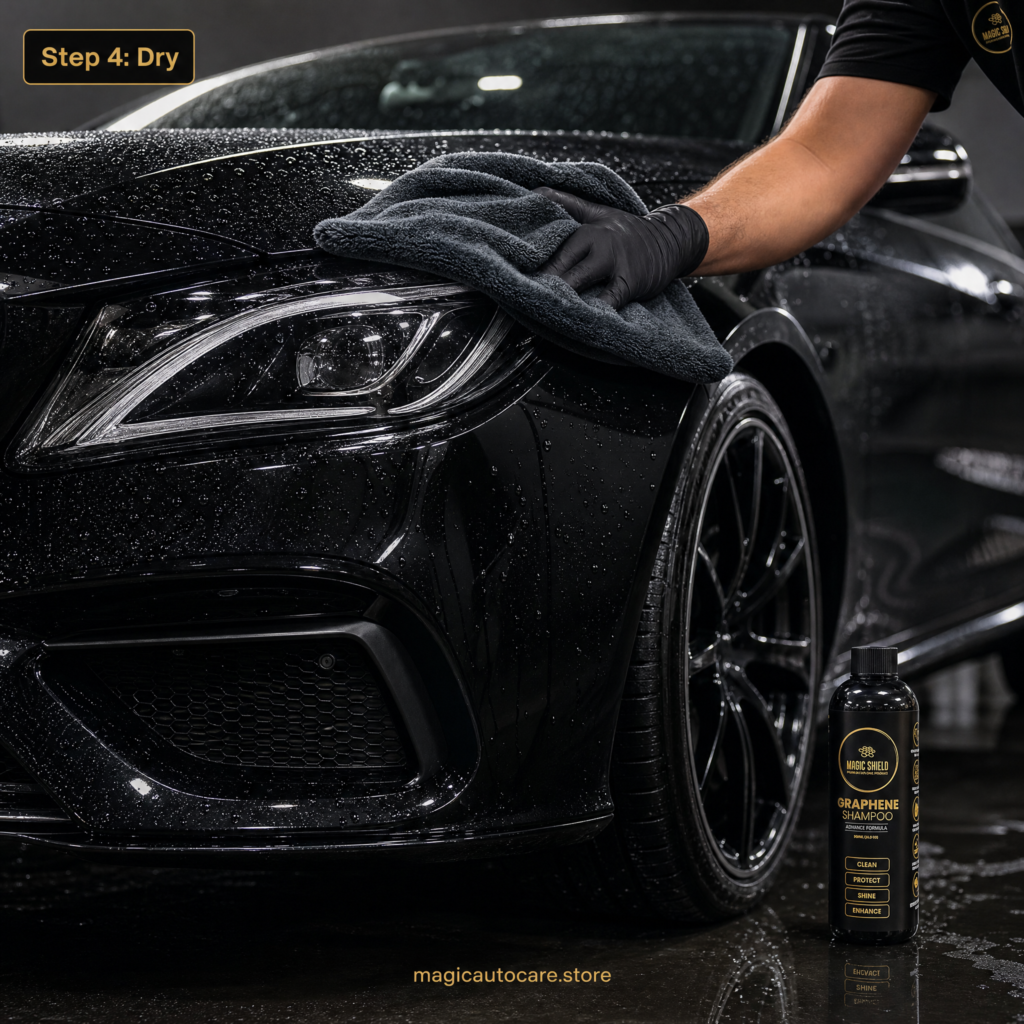
Drying is where many coated cars pick up spots and fine scratches. When water evaporates on the paint it leaves its dissolved minerals behind, and on a hot Australian day that can happen within minutes.
- Start drying straight after the final rinse, beginning with the roof and glass.
- Lay a large, plush microfibre drying towel flat on the panel and gently pat or draw it towards you. Don’t scrub or buff.
- Use a separate, clean towel for the lower panels.
- Use a blower for mirrors, grilles, badges and wheels, where trapped water drips out later and leaves trails.
- Check the car in good light and catch any drips around mirrors, handles and the boot lid.
If you live in a hard-water area, be extra quick. Water Corporation notes that some parts of Western Australia have hard water, particularly where supply comes from groundwater. If spots do appear, deal with them soon; they’re easier to remove while fresh.
Washing mistakes that can wear down a ceramic coating
- Dish soap and household cleaners. They aren’t made for automotive paint, can leave residue, and may be harsher than your coating’s care instructions allow.
- Brush car washes. WhichCar points out that drive-through washes with brushes tend to scratch paint. If you must use an automatic wash, a touchless one is the gentler option, but check your coating’s guidance first.
- Washing in direct sun or on hot panels. Shampoo and water dry before you can rinse them, leaving streaks and spots.
- One bucket, a sponge or an old bath towel. These trap grit and keep putting it back on the paint.
- Scrubbing stubborn marks. If something doesn’t lift with gentle passes, soak it or use a dedicated product made for that contaminant.
- Polish or cutting compound as a “deep clean”. Polishes are abrasive by design and remove a fine layer of the surface, which can include your coating.
- Strong degreasers or harsh acidic or alkaline cleaners, unless your coating manufacturer specifically approves them.
- Washing before the coating has cured.
- Leaving bird droppings, sap or bug splatter until the weekend.
How often should you wash a ceramic coated car in Australia?
There’s no single right interval. Wash the car when it’s visibly dirty, and treat bird droppings, tree sap, bug splatter and salt spray as jobs for today. A coating makes cleaning easier; it doesn’t make it safe to leave contamination sitting on the paint.
How you use and park the car matters more than the calendar:
| Your situation | Wash sooner when… |
|---|---|
| Daily driver parked outside | It’s parked under trees, near the coast or on a dusty street |
| Garaged weekend car | It’s been driven through rain, roadworks or a swarm of bugs |
| Coastal suburbs | Windy days have left a film of salt spray on the paint and glass |
| Regional and outback driving | Red dust, mud or insect residue has built up after a trip |
If your installer’s warranty specifies a maintenance or inspection schedule, follow it.
Australian conditions that change how you wash
Strong sun and heat
Australia has some of the highest UV levels in the world. ARPANSA and Cancer Council note that in January, average UV Index values on clear days are forecast at 11 or more across most of the country. Heat is also what turns washing water into spots. Wash early or late, keep panels cool, and park in the shade where you can.
Coastal salt
Salt spray settles on paint, glass and trim in coastal areas, often without you noticing until the car looks dull. Rinse it off regularly rather than letting a week of sea breezes build up.
Bugs on summer road trips
Insect residue is far easier to remove when it’s fresh. Soak it with shampoo solution or a foam pre-wash and give it time to soften before you wipe. Never scrape at it.
Bird droppings and tree sap
Act quickly, especially in hot weather. Germany’s ADAC motoring club warns that in heat, bird droppings can begin attacking the top layer of clear coat within 10 to 20 minutes. Lay a microfibre cloth soaked in shampoo solution over the spot for a minute or two, then lift the softened mess away without rubbing. A coating can make removal easier, but it isn’t a guarantee against marking.
Dust, red dirt and gravel roads
Fine dust is abrasive. After a dusty drive, a long, generous pre-rinse matters more than ever. Don’t dry-wipe a dusty car with a cloth or a duster.
Hard water
If your tap water leaves white marks on the shower screen, it’ll do the same to your car. Dry promptly and work in the shade. A filtered or deionised final rinse can reduce spotting, but it’s optional, not essential.
Water restrictions and stormwater
Check your local water rules before washing at home, as restrictions vary by state, council and season. Using buckets rather than leaving the hose running saves water. NSW environment guidance suggests washing on the grass or at a car wash that recycles water so suds don’t reach stormwater drains.
How to maintain a ceramic coated car between washes
- Watch the water behaviour. If beading or sheeting seems weaker, a film of traffic grime may be masking the coating. A thorough wash often brings it back before you assume the coating has worn.
- Decontaminate when needed, not by habit. Brake dust can leave iron particles bonded to paint and wheels. An iron remover such as Magic Shield Iron Remover can help, but check that your coating maker or installer approves it first.
- Top up with a compatible maintenance spray. A spray-and-wipe product applied to clean, dry, cool paint can refresh gloss and slickness. Check your coating’s guidance and test a small area first.
- Park smart. Covered parking and avoiding trees cut down on sun exposure, sap and droppings.
- Keep a small kit in the boot. A couple of clean microfibre cloths and a bottle of water let you deal with droppings before they bake on.
If your paint already shows swirl marks from past washes, a coating won’t hide them. Our guide on how to remove swirl marks from a car explains when polishing helps and when to see a professional.
Magic Shield products for washing and maintaining a coated car
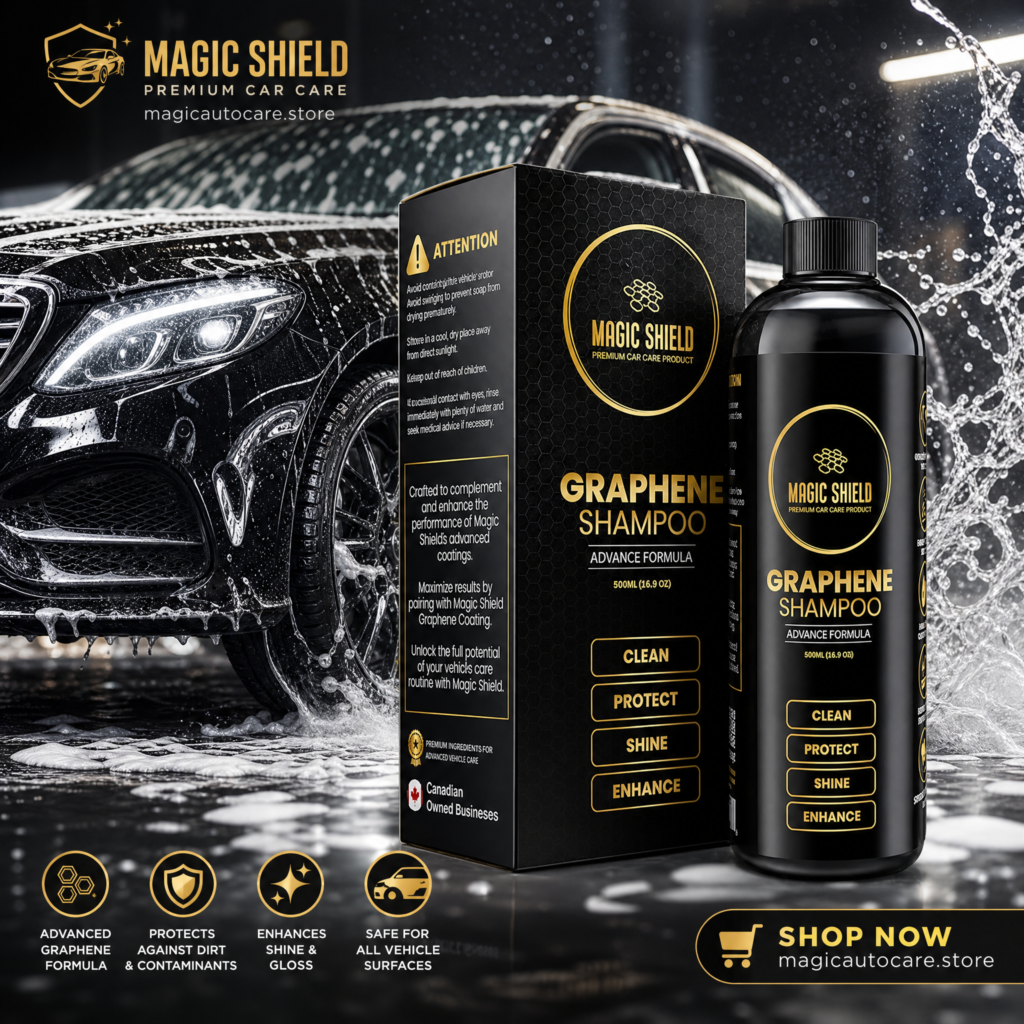
If you’re building a coating-friendly wash routine, two products from our Australian range fit the job:
- Magic Shield Graphene Shampoo is a pH-neutral car wash shampoo described as safe for coatings, with a graphene and SiO₂ formula. Use it with a microfibre mitt out of direct sunlight, rinse thoroughly and don’t let it dry on the paint. Always mix it according to the label.
- Magic Shield Graphene Ceramic Spray Coating is a spray-and-wipe coating applied after washing and drying. It can be used on its own or to refresh a compatible coating; check your coating maker’s care guidance and test a small area first.
If your coating was professionally installed, ask your installer before adding any topper, so you don’t affect the warranty conditions. For more on choosing a shampoo, see our guide to the best pH-neutral car shampoo for ceramic coating.
Quick checklist: washing a ceramic coated car
- Coating fully cured according to its instructions
- Car in the shade, panels cool to touch
- Wheels cleaned first with separate tools
- Thorough top-down pre-rinse
- pH-neutral shampoo, two buckets and clean microfibre mitts
- Top-down washing with light, straight passes
- Rinse before suds dry
- Dry straight away with clean microfibre or a blower
- No brush washes, dish soap or polish
Frequently asked questions
How do you wash a car with ceramic coating?
Pre-rinse the car thoroughly, clean the wheels with separate tools, then hand wash in the shade with a pH-neutral shampoo using the two-bucket method and a microfibre mitt. Work from the top down, rinse before the suds dry, and dry the car immediately with a clean microfibre towel or a blower.
What soap should you use on a ceramic coated car?
Use a pH-neutral car shampoo that’s labelled as suitable for coated paint and compatible with your coating maker’s instructions. Avoid dish soap, household cleaners and strong degreasers, which aren’t designed for automotive finishes.
How often should you wash a ceramic coated car?
Wash it whenever it’s visibly dirty, and remove bird droppings, sap, bugs and salt spray as soon as you spot them. Cars parked outdoors, near the coast or under trees will need washing more often than garaged cars.
Can you use a pressure washer on ceramic coating?
Generally yes, once the coating has fully cured. Use a wide fan nozzle, keep a sensible distance, and avoid aiming directly at panel edges, badges, stone chips or the edges of paint protection film. Follow any specific limits in your coating’s care instructions.
Are automatic car washes safe for ceramic coated cars?
Brush car washes are best avoided because their brushes can scratch paint and wear the coating. A touchless wash is gentler if you’re short on time, but a careful hand wash remains the safest option. Check your coating’s aftercare guidance too.
Can you use regular car shampoo on ceramic coating?
A regular car shampoo can be fine if it’s pH-neutral and free of waxes or additives your coating maker advises against. Read both the shampoo label and your coating instructions before using it.
How do you prevent water spots on a ceramic coated car?
Wash in the shade on cool panels, rinse before anything dries, and dry the car straight away with a clean microfibre towel or blower. In hard-water areas, work quickly and consider a filtered final rinse.
The bottom line
A ceramic coating does a lot of the hard work, but your wash routine decides how good it looks a year from now. Get the grit off before you touch the paint, use a gentle pH-neutral shampoo, keep the panels cool and dry the car before the sun does. Do that consistently and your coating stays glossy and easy to clean.
Ready to set up a coating-friendly routine? Browse the Magic Shield maintenance range, or contact our Australian support team if you’re not sure which product suits your coating.