
Dirty, yellow, or cloudy headlights can make even the cleanest car appear old and poorly cared for. Learning how to clean car headlights properly matters even more, because worn lenses cut the light that reaches the road and can lead to poor driving performance at night and in bad weather.
If you want to know how to clean car headlights at home, it is essential to understand the cause. Usually, a simple wash can remove grime, while yellow and cloudy spots can indicate the problem of oxidation.
In this article, we will show you how to clean car headlights, remove dirt, deal with headlight oxidation, and restore clear lenses safely. We will also cover the popular DIY techniques that are not recommended, and how to keep your headlights in good condition in Australia.
How Do You Clean Car Headlights?
The quickest way to learn how to clean car headlights is simple: wash the lens using car shampoo with water. After this, gently wipe it with a clean microfibre cloth, rinse it, and wipe it dry.
If yellow or cloudy state persists after washing, it indicates oxidation, not dirt. For this, use a headlight restoration kit made for plastic lenses, follow its instructions exactly, and finish with the UV-protective coating or sealant it prescribes.
Note: The simple wash will take care of dirt but will not deal with the damaged plastic.
Why Do Car Headlights Become Cloudy or Yellow?
Most modern vehicle headlights use clear polycarbonate plastic lenses. Although this material is durable, its surface can gradually deteriorate because of environmental exposure and everyday driving — which is why knowing how to clean car headlights the right way starts with understanding the cause.
Here are some common reasons headlights lose their clarity.
1. UV Exposure
The harsh sunlight in Australia may cause gradual damage to plastic headlight lenses. As the coating wears off, the plastic underneath it can oxidize and take on a yellow and cloudy appearance.
2. Road Dirt and Contamination
The headlight lenses accumulate dust, mud, bugs, grime, and other contaminants while driving. If these deposits are allowed to build up for some time, they will cause the headlights to lose their brightness.
3. Oxidation and Surface Wear
Oxidation is the process of gradual deterioration of the outer layer of the headlight lens. During this process, the lens will develop a cloudy appearance that cannot be removed by simple washing.
4. Scratches and Physical Damage
Small scratches, stone impacts, and general wear of the headlight’s plastic may interfere with its transparency. More serious issues may require specialized repair rather than mere washing.
5. Moisture Inside the Headlight
Sometimes the foggy look is not on the outside, but rather because of moisture inside the headlight. Fog or condensation may be a sign of a damaged seal or another defect.
How to Clean Car Headlights at Home: Step-by-Step
Before trying any restoration method, check whether your headlights are simply dirty or genuinely oxidised — knowing how to clean car headlights starts with knowing which problem you are fixing.
Step 1: Park in a Shaded Area
Park the vehicle where it is not exposed to direct sunlight. The headlights should have been switched off for a while and allowed to cool before being cleaned. Cleaning in the shade will help ensure that the cleaners and water dry out properly.
Step 2: Rinse Away Loose Dirt
Rinse the headlights with clean water to wash off dirt, mud, and other surface grime. Make sure not to wipe a dry and dusty lens, as trapped dirt may cause scratches on the lens.
Step 3: Wash with Car Shampoo
Create a mild car shampoo solution as per the instructions given by the manufacturer. Make use of a soft cloth or a clean microfibre wash mitt to clean the headlight. While washing the headlight lens, make sure to be gentle around the edges and apply minimal pressure. See our guide to the best car shampoo in Australia for recommendations.
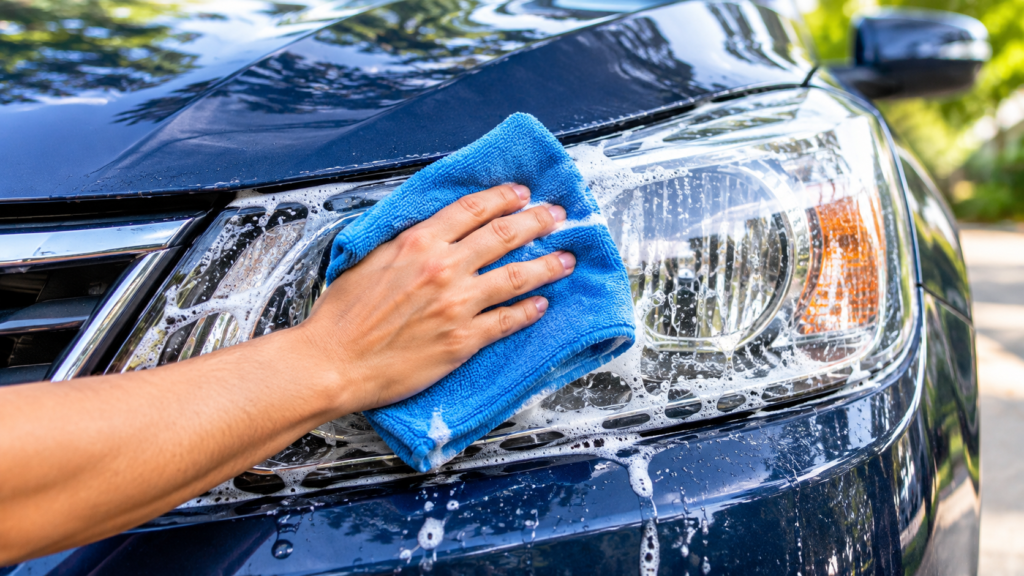
Step 4: Rinse and Dry the Lens
Make use of clean water to rinse off any leftover shampoo. Dry the headlights off using a soft microfibre towel.
Step 5: Inspect the Headlights
Once the headlight lens is dry, the final check in how to clean car headlights is to inspect the lens in sunlight.
How to Restore Cloudy or Yellow Car Headlights
If the regular wash could not remove the haze, the cause is likely oxidation or damage to the outer coating, so this is where how to clean car headlights moves from a simple wash to a restoration.
A headlight restoration kit is usually a better choice than household cleaning products. The kit is meant for plastic lenses of car lights and includes cleaning agents, abrasive pads, sanding material, and a protective finishing agent.
Each kit has its own specific way of operating, and you must always follow the instructions of the manufacturer.
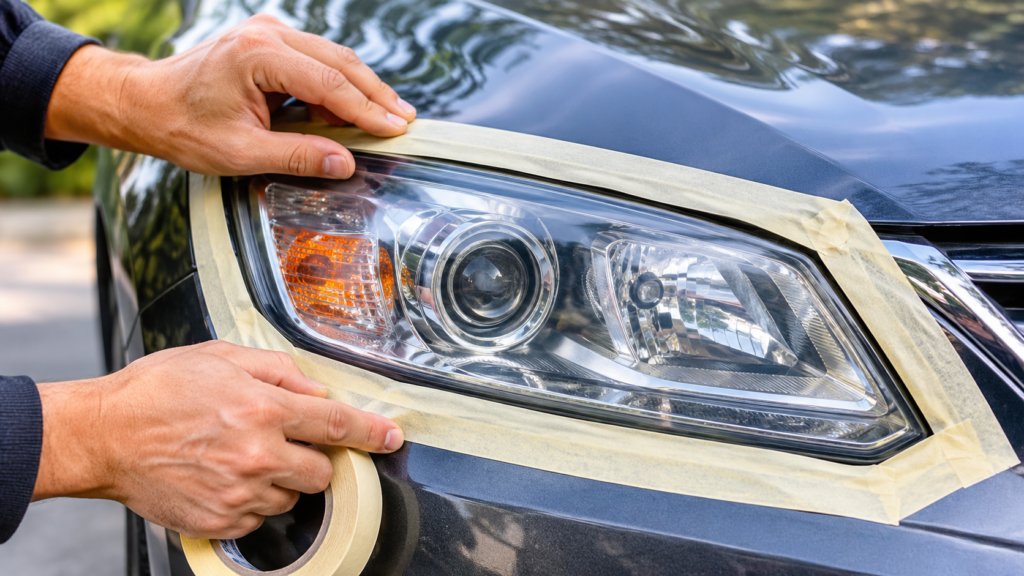
1. Protect the Surrounding Paintwork
Begin by cleaning the section around the headlights. Then apply automotive tape surrounding the edges to protect paint surfaces from impact made by the restoration material. Doing this is crucial if your restoration includes sanding as part of the process.
2. Follow the Restoration Kit Instructions
Restoration kits vary; some utilize a polish compound and polishing pads, and others comprise different forms of wet and dry abrasives. Sanding should be followed by a thorough cleaning of the surface, and it should be ensured that the surface is completely dry. Never use a harsh abrasive or improvise with sandpaper until you understand the properties of the material used to make the headlight.
3. Clean Away the Residue
After you have finished restoring the surface, you should remove residual materials according to kit instructions. Use a clean microfibre cloth and check whether the lens is uniform before proceeding to the last step.
4. Apply UV Protection
This is one of the crucial steps in how to clean car headlights and restore them properly. The restoration process might have removed the worn-out upper layer, but the uncovered plastic still requires proper UV protection. Apply a UV protectant there. Not doing this step can result in the lenses clouding again quite soon.
5. Allow the Coating to Cure
Follow the instructions for drying and setting times. Do not wash the headlights or pour water over them until the drying time has passed. The restoration should make the lenses clearer and more uniform, provided everything was done correctly beforehand.
Can You Clean Yellow Headlights with Toothpaste?
An idea that many people have to fix cloudy headlights is using toothpaste, but this is not a solution that will permanently solve the problem.
Certain toothpaste brands may have some mild abrasives that may improve the look of cloudy headlights. However, it is not intended specifically for headlights and will not restore the headlight lens or UV coating.
Using toothpaste is likely to give inconsistent results, especially if the headlights are badly damaged.
To have more consistent results, one should use a specially designed headlight restoration product and apply it according to the instructions.
Can You Use WD-40 or Household Cleaners on Headlights?
You must steer clear of using WD-40, vinegar, baking soda, and commercially available strong household cleaners for fixing cloudy headlights.
These substances are not replacements for effective restoration systems. They will not give you effective repairs against UV degradation and don’t provide protection after restoration.
Also avoid abrasive kitchen sponges, stiff brushes, or unauthorised materials, which can damage or scratch the headlight surface.
The best choice would be to make use of products made for the cleaning of headlight lenses exclusively.
How to Prevent Car Headlights from Turning Yellow Again
Once your headlights are clean or restored, knowing how to clean car headlights regularly — and maintaining them afterwards — can help preserve their appearance.
Wash the Headlights During Regular Car Washing
Wipe off any dust, bugs, and road oil before it accumulates. Use a gentle car wash soap and a fresh microfibre mitt. Whenever possible, use a garage, carport, or shaded area when parking. This will help reduce exposure to the sun.
Park in Covered or Shaded Areas
If possible, park in a garage or any shaded area. This will help prevent too much exposure to sunlight.
Maintain the UV-Protective Layer
Apply UV sealant or any headlight protection according to the instructions from the manufacturer of the product. This method can help provide lasting protection. Standard car wax or paint protection is not a substitute for a UV sealant made for plastic headlamps.
Inspect Your Headlights Regularly
Look for yellowing, cracks, moisture, peeling, and uneven output. If the beam appears diminished or uneven after washing, go to a mechanic.
When Should You Replace or Professionally Restore Headlights?
A general cleaning method will not fix every cloudy headlight — knowing how to clean car headlights helps, but some lenses need professional restoration or replacement.
- The lens is damaged in a serious way, such as with cracks.
- The outer coating is very badly peeling.
- The headlight does not get repaired even if the appropriate restoration technique is applied.
- There is moisture inside the headlight assembly.
- There are signs of damage in the reflector or some elements inside.
- The light output is weak or irregular.
- The only option may be to replace the lens or the entire headlight assembly.
FAQs
1. How do you clean car headlights at home?
Wash the lenses with soap and water, dry them with a clean cloth, and repeat if needed. If there is yellowing or a cloudy appearance, it might necessitate the use of special headlight restoration products.
2. How do you clean cloudy car headlights?
Firstly, it is essential to wash the headlights to remove contamination and dirt. If the cloudy look persists, a suitable product to restore headlights made of plastic surfaces may be used. The instructions should be followed, and UV protection should be applied afterward.
3. How do you remove yellowing from car headlights?
Yellow headlights are mostly caused by oxidation due to the wear and tear of the protective outer coating. The coating may break down due to factors such as sunlight, air pollution, and chemicals. The headlight may need professional restoration or replacement in case of severe damage.
4. Does toothpaste really clean yellow headlights?
Toothpaste may be able to temporarily change the surface hazy look of the headlights due to its mild abrasives. However, it does not give an effective process of restoration or provide UV protection.
5. Why do headlights become cloudy again after cleaning?
The cause of foggy headlights may be due to the oxidation that is still present in the underlying surface, or the fact that the plastic that has been restored is not properly protected from UV rays. It is possible for dirt to build back up in the process of normal driving.
6. Can cloudy headlights reduce visibility?
Cloudy headlights can diminish the amount of light travelling to the road. If your headlights are not working properly, consider taking them to a technician instead of merely cleaning.
7. How often should I clean my car headlights?
You ought to clean your headlights during every wash or whenever there is dirt or insect debris on your car. Furthermore, make sure you check your headlights regularly for other forms of damage.
8. Can I use car polish on plastic headlights?
Most car polishes are not appropriate for use on plastic. Always refer to the manufacturer’s guidelines.