
Run your hand over your car’s hood right after a wash. Does it feel silky smooth, or kinda gritty, like tiny sandpaper? If it’s the second one, then your paint is still hanging onto contaminants that soap and water just can’t reach. That’s where a clay bar for car detailing comes in, and yeah it can be a bit of a game changer.
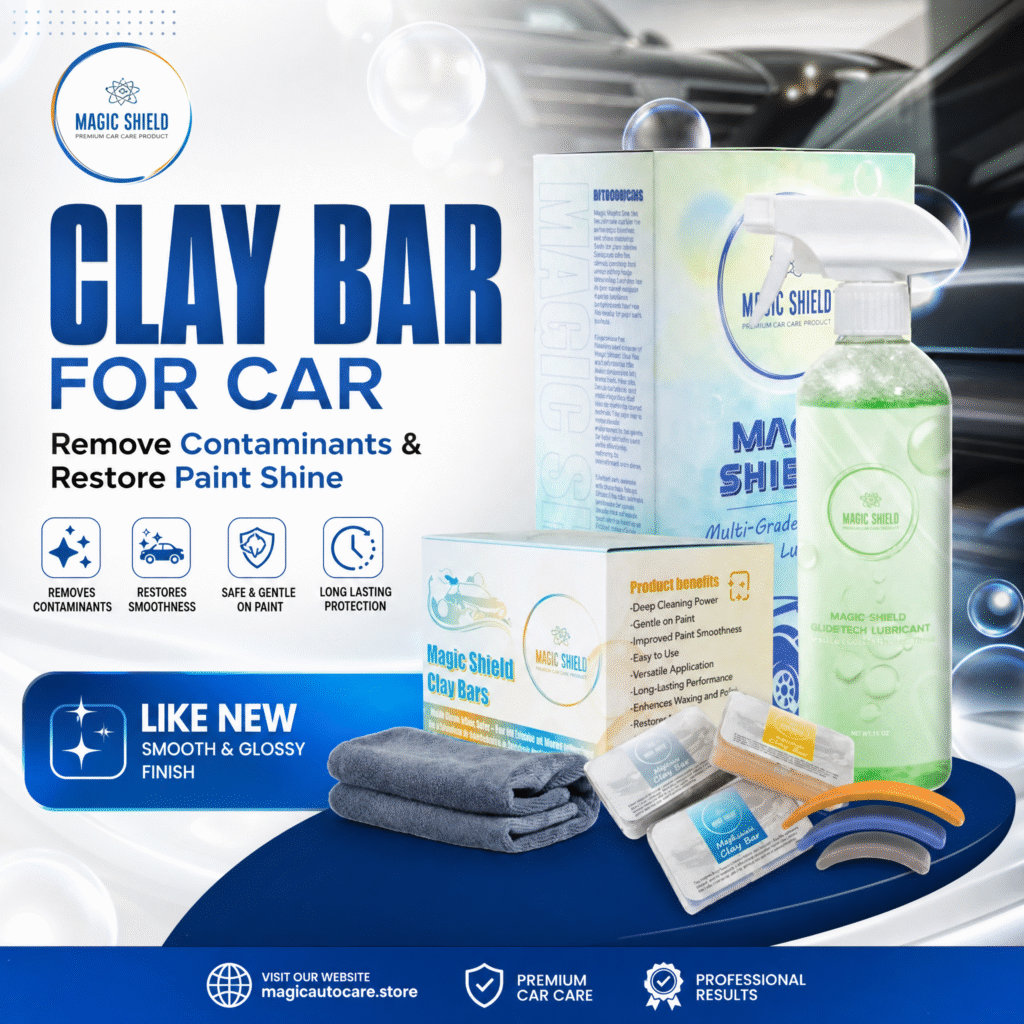
A clay bar is one of those tools in a detailer’s kit that people totally under appreciate. It doesn’t only “clean” your paint, it decontaminates it, pulling out stubborn bits that have already decided to sit under the surface. Those embedded specks can cause that rough dull feel, even if the car looks shiny after washing. So whether you’re a casual weekend detailing enthusiast or you just want your car looking its best, knowing how and when to use a car clay bar can really improve both appearance and long term paint health.
In this guide, we’ll cover what a clay bar actually does, why regular washing isn’t enough, when it makes sense to add it to your routine, and how Magic Auto Care can help you get it handled the right way.
What Is a Clay Bar and What Does It Do?
A clay bar is a flexible, putty like detailing product made to lift contaminants straight from your car’s paint surface. It’s different from soap, because soap rinses away loose grime. It’s also different from wax, Clay Bar for Car which lays down a protective coat. Clay bar detailing works on a more physical level though, because it removes bonded particles that are sitting in the clear coat.
How Contaminants Bond to Paint
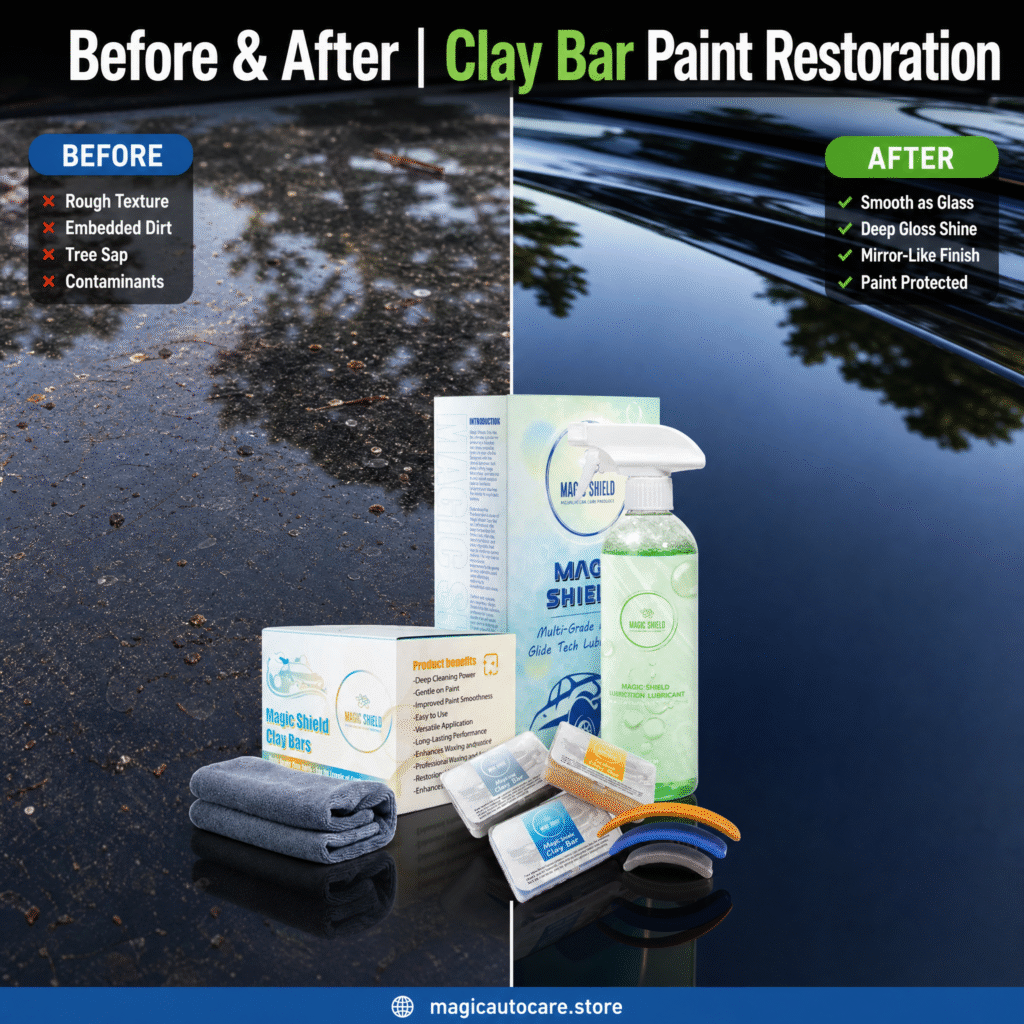
Every day your car gets hit with airborne stuff: brake dust, industrial fallout, tree sap, tar, pollen, rail dust , and more. Over time, and especially when the sun is cooking the finish, those particles can cling to the microscopic pores in the clear coat. Once they’re bonded, you’re usually not getting them off with a normal wash — they become part of the surface texture. This is what detailers mean when they say “paint contamination.”
When to Use a Clay Bar
Timing matters when it comes to car paint decontamination. Here’s a practical guide:
Before Waxing, Sealing, or Ceramic Coating
Always clay your paint before applying any protective product. A smooth, contaminant-free surface allows wax, sealant, or ceramic coating to bond evenly and last longer.
Every Few Months, Depending on Exposure
If you park outdoors, drive frequently on highways, or live near industrial areas, your car accumulates contaminants faster. Most detailers recommend clay bar treatment every 3–6 months, though garage-kept vehicles may need it less often.
After Long Storage or Seasonal Changes
Cars that have sat idle or Clay Bar for Car been exposed to a change of season (spring pollen, winter road salt) often benefit from a decontamination pass before their next major detail.
How to Use a Clay Bar for Car Detailing: Step-by-Step
- Wash and dry your car thoroughly. Starting with loose dirt still on the surface can cause scratching.
- Break off a manageable piece of clay and flatten it into a disc that fits comfortably in your palm.
- Spray a generous amount of clay lubricant onto a small section of paint — never work clay on a dry surface.
- Glide the clay back and forth gently, using light pressure. You’ll feel the resistance decrease as contaminants are lifted.
- Fold the clay regularly to expose a clean surface and avoid reapplying dirt back onto the paint.
- Wipe the section dry with a clean microfiber towel and move to the next panel.
- Follow up with wax, sealant, or ceramic coating to lock in that smooth, protected finish.
A Few Practical Tips
- Never let the clay bar touch the ground — dropped clay should be discarded, as trapped grit can scratch your paint.
- Work in shaded, cool conditions; direct sun can dry out the lubricant too quickly.
- Inspect the clay periodically — if it looks heavily embedded with debris, fold it or use a fresh piece.
Choosing the Right Clay Bar for Detailing
Not all clay bars are created equal. Look for a formula that’s fine-grade for regular maintenance use, since aggressive or coarse clay bars are typically reserved for heavily contaminated commercial or fleet vehicles. Clay Bar for Car A quality automotive clay bar should glide smoothly with proper lubrication and leave no marring behind.
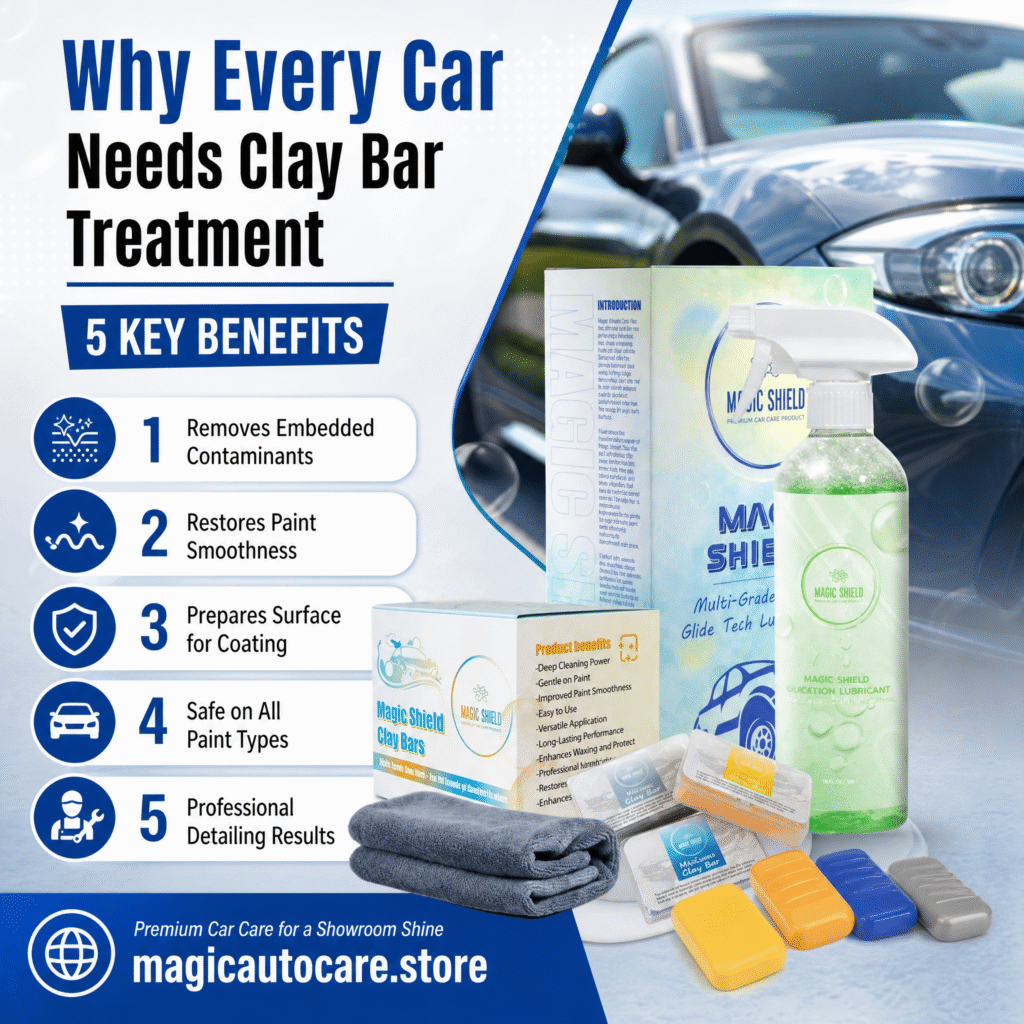
Magic Auto Care’s clay bar is formulated for everyday detailing enthusiasts who want an effective way to remove contaminants from car paint without the risk of marring that comes with overly aggressive products. Paired with a dedicated clay lubricant, it’s designed to make the decontamination process straightforward, even for those newer to detailing.
If you’re building out a full decontamination routine, it’s worth pairing your clay bar with a pH-balanced car wash soap and a quality microfiber drying towel — both help minimize the risk of reintroducing dirt during the process.
FAQs:
Does a clay bar remove scratches?
Kinda no, not really. A clay bar is meant to lift grime and rail dust that are on top of the clear coat or lightly bonded to it. It doesn’t really “grab” into the paint, and it will not fix swirl marks or actual scratches, not in the way polishing does. For that correction, you want a proper polish step.
Can I use a clay bar on a new car?
Yep yes, and it is often a really smart move. Even brand new cars collect rail dust and other transport-related contaminants during shipping and time on the lot. Claying a new car before your first wax or coating helps set up a better bond, and it makes the surface feel way slicker too.
How often should I clay my car?
Most cars do well with a clay bar treatment every 3 to 6 months. But the real answer depends on where you drive, how much road grit you get, and how often your car sits under trees, construction zones, or high-dust areas.
Is clay bar detailing safe for all paint types?
In general yes, if you do it correctly and keep everything properly lubricated. A fine-grade clay bar, combined with a good clay lubricant, reduces the chance of marring. The big rule is no dry contact, because that’s when you risk dragging tiny particles across the clear coat.
What’s the difference between a clay bar and a clay mitt?
They do the same kind of decontamination. A clay bar is usually hand-formed into a disc or block. A clay mitt is basically textured material built into a glove-like tool, and it can feel faster for big panels, mirrors, or when you’re trying to cover more area with less effort.
Can I reuse a clay bar?
Yes, you can usually reuse it, but only with care. You should knead it often so you keep getting a fresh surface. If you drop it on the ground, or if it gets really embedded with debris, it’s better to toss it. Once it becomes too contaminated or hardened, replace it.
Also Read:
Nano Spray Coating for Cars | Long-Lasting Paint Protection
The Car Shampoo Kit That Washes Without Stripping Your Shine