
If you’ve ever climbed into a car that’s been sitting in the sun all day, you already know how brutal Aussie weather can be on leather. The seats get scorching, the surface starts to feel a bit stiff, and over a few years that once supple leather can start to crack, fade, or collect stains that never fully come out. It’s one of those situations that happens slowly enough that most owners don’t clock it until the damage is kinda already set.
This is where car leather ceramic coating has become a pretty genuinely useful choice for people who want to keep their interior looking like it did on day one. It’s not a miracle repair, and it won’t undo years of neglect, but as a preventative shield, it does a solid job of helping leather stay cleaner, be more resistant to everyday scuffing and use, and remain easier to care for later.
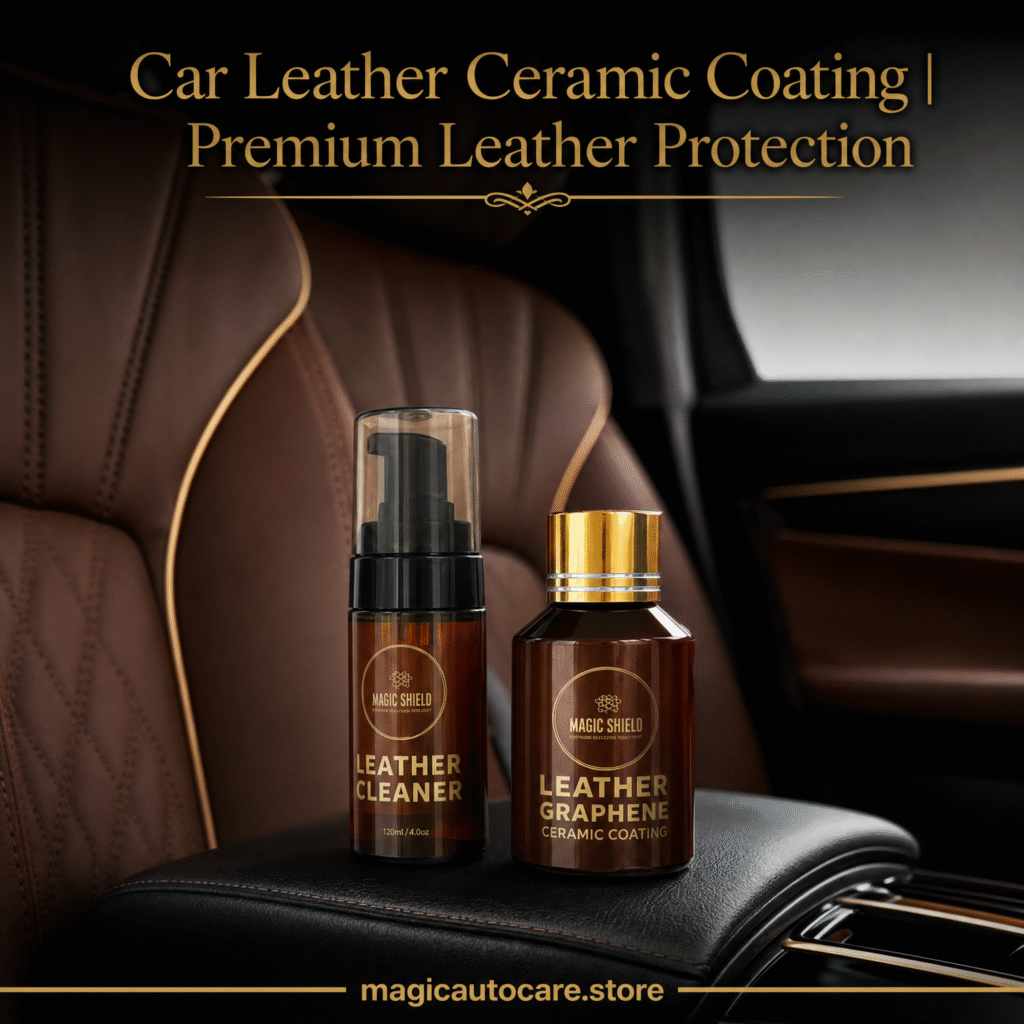
At Magic Auto Care, leather protection is one of the topics we get asked about most, specially from owners who have just picked up a new or pre-owned car with leather trim and want to protect their investment from the start. This guide goes over what leather ceramic coating actually is, why it matters, and how to get the best results from it.
What Is Car Leather Ceramic Coating?
Car leather ceramic coating is a protective product you put on leather surfaces inside your vehicle to build a thin semi permanent shield over the material. It’s kinda different from a leather conditioner, because conditioner actually soaks in ,and you usually have to redo it fairly often. With ceramic coating it mostly stays on the surface and bonds to it, so you get a layer that helps fend off liquids, oils, and that everyday grime stuff.
The “ceramic” part is basically the chemistry. It’s often silica based compounds that cure into a hard thin film when applied the right way. You can think of it like those ceramic coatings people use on paint, but in this case it’s adjusted for leather which is softer and more porous ,so the whole idea is to suit the material better.
Day to day, the coating shouldn’t really mess with how the leather feels or how it looks, if everything is done properly. A solid car leather ceramic coating should keep the surface looking natural, not shiny in a fake way, not plasticky either. At the same time it gives better resistance against spills and dirt that untreated leather just can’t handle as well.
Why protect your car leather?
Leather is a natural material, and like most natural things, it reacts to its surroundings. A few factors work against it every single day, even if you cant notice the changes right away.
In Australia, UV exposure is probably the main culprit. Direct sun breaks down the natural oils in leather little by little, and thats what causes the dry, cracked appearance you end up seeing on older seats. Dashboards and door trims take the hit too, just about as much as seats do, and sometimes even more depending on the angle of the light.
Then there’s the constant dirt and grimy residue that comes in from shoes, bags, and everyday use. This is not only a looks issue—small grit can get into the pores of the leather, and over time it can act almost like sandpaper, slowly wearing the surface down.Oils from hands and skin are something most people rarely sit and think about, yet they are a steady, constant thing. Every single time you grab the steering wheel or touch the armrest there s a small amount of natural oil that goes onto the leather. Alone it feels tiny, but repeated thousands of times in a year, it slowly changes the surface.
Benefits of Car Leather Ceramic Coating
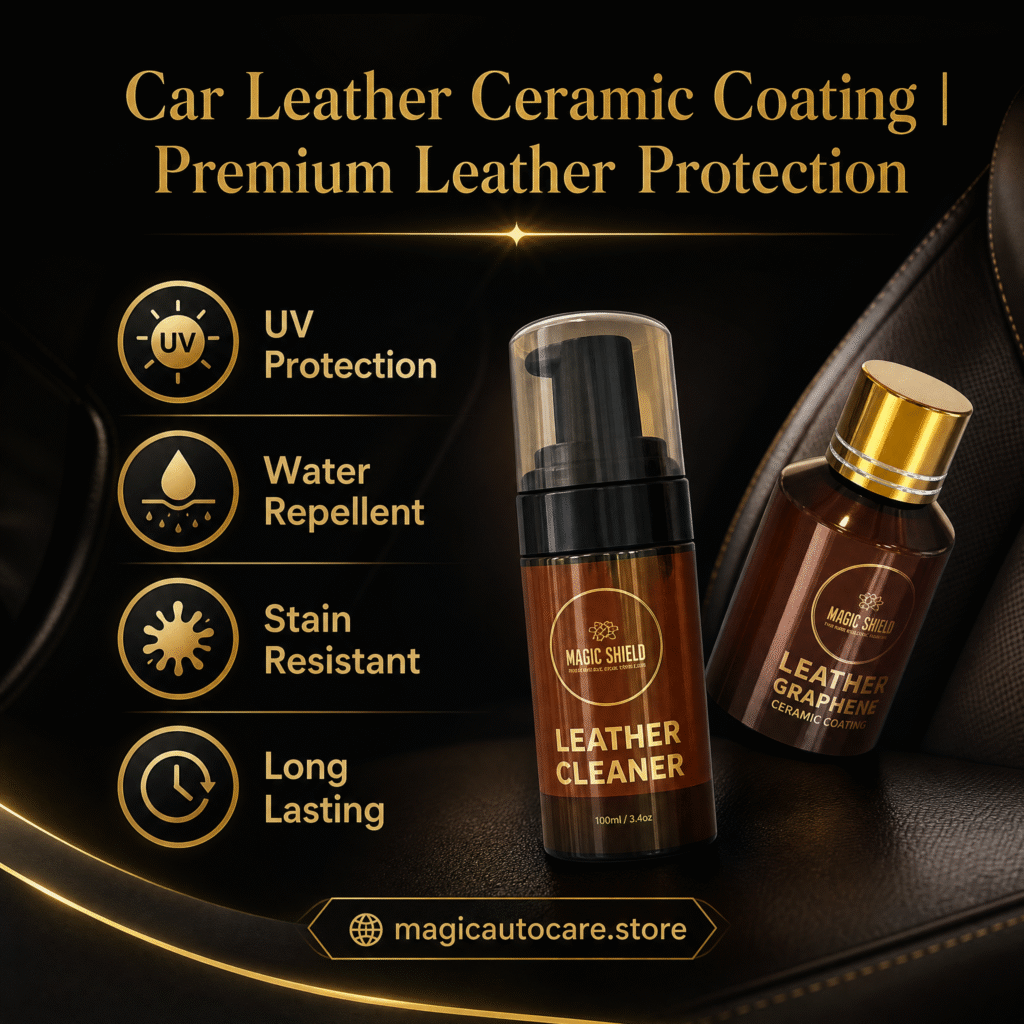
The main draw of a ceramic coating for car leather, kind of boils down to a few useful perks that really matter in real life ownership, not just in marketing speak.
Easier cleaning—since the coating forms a barrier, dirt and dust usually linger on the surface more or less, instead of soaking in, so wiping the seats down turns into a faster little routine.
Protection from everyday contaminants — dust, light grease, and general grime are less likely to get embedded into coated leather.
Better stain resistance — liquids tend not to absorb straight through, which helps you wipe up a spill in time before it sets.
UV-related protection — when the surface is coated, it can cut down how much direct UV the leather takes in, so the material stays supported over time.
Keeping the original leather look — because the finish is meant to be low-gloss and natural, it doesn’t make the cabin look weirdly “over treated” or too shiny.
Longer-lasting interior finish — with reduced contamination plus less UV stress, the leather often keeps its appearance and feel for longer, between deeper conditioning sessions.
Of course, none of this means the leather becomes indestructible. It’s more like protection not full immunity—still, it tilts the odds quite a bit in your favour.
How Does a Ceramic Coating Help Protect Leather?
The whole thing is kind of simple once you see the basic idea at a surface level. When a leather ceramic coating is put on, the liquid gets worked into the material and then it’s allowed to cure. While it cures, the product forms a thin kind of semi-permanent film that sticks to the leather texture, so it’s not just sitting on top.
That film changes how the leather behaves in a few practical ways. For example it cuts down how easily liquids and oils can move inward, so spills often bead up and hang around instead of soaking right through. It also gives the surface a smoother, more even feel which means dust and grit are less likely to lodge inside the grain.
Now, let’s keep it real — nothing makes leather fully waterproof, or permanently stain-resistant, no matter what marketing says. A good ceramic coating is more like a time buffer. It slows down how fast contaminants, and UV wear, start to affect the material. That’s the honest, accurate way to understand what a ceramic coating for car leather actually does.
Car Leather Ceramic Coating vs Traditional Leather Conditioners
Honestly, it’s a very common question, and the short answer is, they kind of do different things, not totally the same. Leather conditioners mostly work by restoring oils and moisture inside the leather. That helps the hide stay supple, softer, you know, and they’re usually put on every few months. They are good for keeping flexibility and comfort, but they do not really form a tough barrier against spills, wet marks, or stubborn stains, so that “protection” fades sooner than most people expect.
A ceramic coating is different, it sits on top of the leather and forms a protective film, like a thin shield, rather than feeding the material from the inside. So instead of focusing on suppleness, it helps resist daily contamination, grime, and those little liquid incidents. In most cases it lasts a lot longer than a typical conditioning session, and you don’t have to reapply it nearly as often as people recondition.
In reality, a lot of detailers — including us over at Magic Auto Care — look at this sort of thing as complementary, not really a face off, you know. Conditioning the leather first, to help it stay healthy and not dry out too fast, then putting on a ceramic coating for real surface guarding, usually leads to the best long term effect. If you coat leather that is dry and kinda poorly conditioned, it just isnt ideal, and likewise, depending on conditioner alone, won’t get you the real stain and contaminant resistance you’re after.
How to Apply Leather Ceramic Coating
Applying it isnt really hard, but somehow people mess it up anyway just by skipping a step or two. That’s the big reason results can look worse than you hoped. The usual flow looks like this, more or less:
Clean the leather first ,like actually thoroughly. Use a proper leather cleaner to clear away surface dirt, dust and grime. Don’t skip it—if you coat over dirty leather you basically trap all that stuff under the protective layer, then it shows up later, kinda annoying.
Get rid of oils and any residue. Body oils and leftover conditioner can block the coating from bonding the right way. A dedicated leather prep product works great, or an isopropyl alcohol wipe-down can help too (but test for colourfastness first, just to be safe).
Let the surface dry completely. Any moisture left on the leather can mess with how the coating cures ,so give it time before moving on. Like wait until it’s properly dry, no damp feeling.
Apply the coating the right way. Follow the exact product instructions for application, usually you want a light even coat with an applicator pad, and work in small manageable sections. Don’t rush the process.
Give it the proper time to cure. This part is where you really need patience. The curing windows differ from one product to another, but skipping ahead on this step is, honestly, one of the usual errors people make.
Then follow the aftercare instructions. Most products suggest steering clear of cleaning or any heavy contact with the leather for a while after you apply it , until the coating is fully set and hardens.
If you’re not sure you can handle it yourself, or if the car has especially delicate or old leather, it can be smarter to get a professional to do it the first time.
What kinds of Car Leather Surfaces actually can be protected?
A ceramic coating, it’s not only a “seat thing”. In general, most real leather surfaces inside your vehicle can get protection, if they’re genuine and properly treated, like for example :
Leather seats — yeah the most obvious one, and also the surface that gets hammered the most over time
Door panels — people ignore them a lot but they’re constantly being touched, plus sunlight
Steering wheels — they pick up hand oil, and daily wear, in a big way
Armrests — this one commonly starts cracking because of repeated contact, over and over
Leather-trimmed interior sections — dash inserts, centre console edging, and other similar areas
That said, not every “leather” you see in modern cars behaves the same. Some interiors use leatherette, vinyl, or coated synthetic materials, and they may respond differently depending on what you apply. It’s smart to double check compatibility before anything goes on, especially on trim that looks unusual. And if you’re even slightly unsure, do a quick test on a small hidden patch first .
How long does a leather ceramic coating last?
Honestly, it’s one of those questions that doesn’t really have a straight answer, because the staying power comes down to a bunch of things at once, and some of them matter more than you’d think:
What exact product gets used and how it’s formulated
What condition the leather is in before application, like if it’s already dry, cracked, or just been sitting
How properly the coating was applied, because technique actually shows up later
How the vehicle gets used day to day, and how often
Your cleaning habits, plus which cleaning products you choose and how you handle them
Environmental stuff too, sun exposure, heat, humidity, cold seasons, all that
With all those moving parts, it really isn’t realistic—or fair — to promise one exact lifespan without knowing your car and your routine. In general though, a leather ceramic coating that was applied well should last longer than a typical leather conditioner treatment by a noticeable margin, but you still should review the product’s specific instructions. They’ll usually give the best clue on expected performance and when reapplication makes sense.
How to take care of a ceramic coated car leather
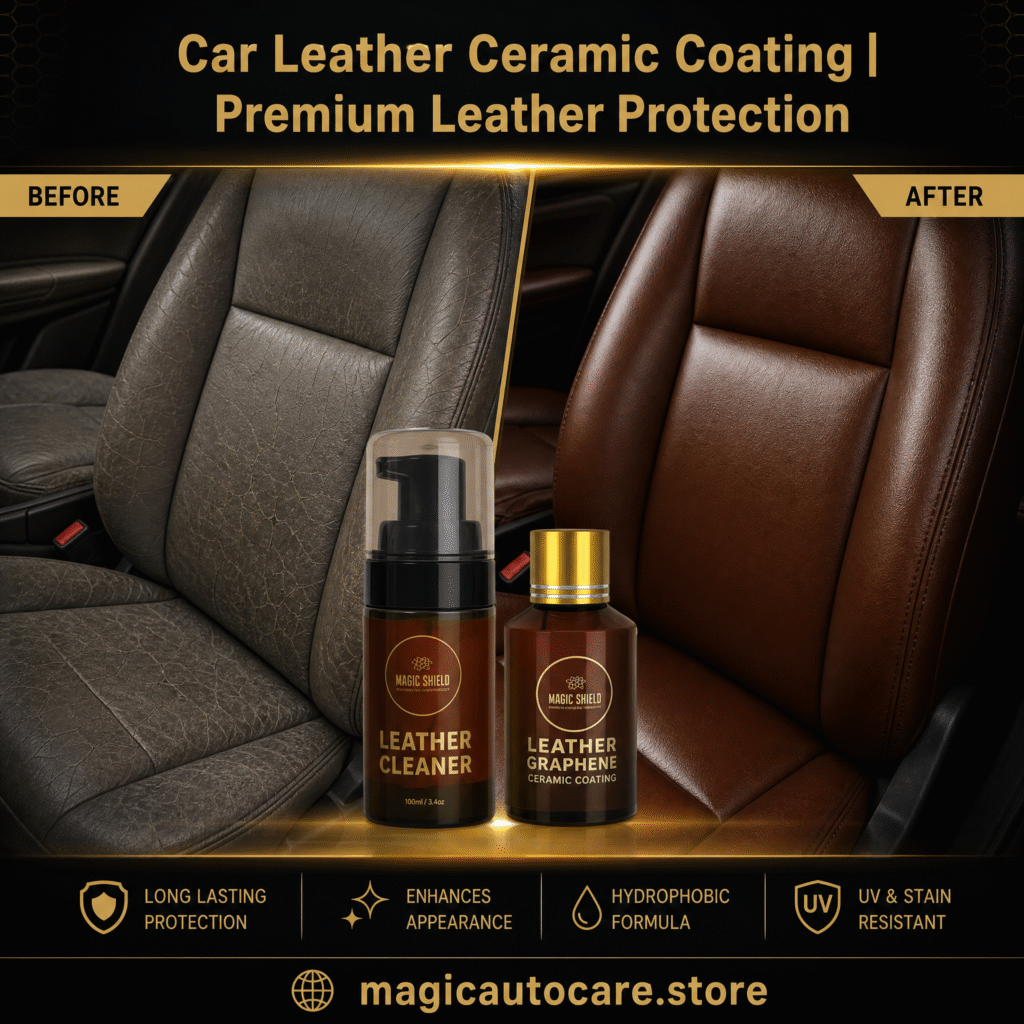
Putting a ceramic coating on leather doesn’t mean you can just, forget about it completely . It’s more like the upkeep becomes less annoying, and also less often. Still, you’ll want to keep things somewhat consistent.
A few basic habits really help :
Regularly wipe down seats and the high touch areas using a soft microfibre cloth
Handle spills right away, instead of waiting around
Choose a pH neutral leather cleaner that’s made for coated surfaces
Try to avoid leaving the car in straight up direct sun for long stretches when you can
Things to steer clear of :
Harsh solvent based cleaners, they can strip the coating or dull it
Abrasive brushes or scrubbing pads, even if they “feel” gentle
Silicone based dashboard sprays, these can mess with the surface finish over time
Over cleaning, because more is not better, and it can wear the protection layer sooner than it should
Is car leather ceramic coating actually worth it?
For most owners who care about keeping their interior looking good over the long run, I’d say the answer leans toward yes, mostly… if you go in with realistic expectations. If the leather is already pretty much cracked, dry, or visibly damaged, then a coating by itself won’t really bring it back. But if it’s newer or already in solid shape, a ceramic layer helps cut down on the little day to day scuffs and dulling that slowly cause the larger issues later.
Another thing that’s easy to overlook is resale. When a vehicle shows clean, well kept leather, it tends to look more convincing during a trade-in or private sale. And because the material is protected, it usually ages in a steadier way, so the buyer scrutiny phase doesn’t hit as hard.
Of course, there’s the flip side. You have the up front time and cost of a proper application, and then a bit of ongoing care so the coating can keep doing its job. For daily drivers, family cars, and vehicles that get used regularly, that trade-off is often pretty reasonable.
Why Choose Magic Auto Care?
Magic Auto Care is all about practical, results-driven car care products for Australian drivers who want to take care of their vehicles properly, without making it overly complex. Our range spans a lot , from exterior paint protection through to interior care , including some products made specifically for automotive leather.
We’re not going to pretend our items are the result of secret lab formulas or won industry awards — we just focus on plain, honest car care that actually does what it promises. And if you’re trying to protect your car’s leather interior, you can check out our leather care and protection range at magicautocare.store.
FAQ’s
What is car leather ceramic coating?
Car leather ceramic coating is basically a protective liquid you apply to automotive leather , then it sets and cures into a thin sort of long lasting layer. it helps guard against stains , oils and those everyday little grime things that show up. think of it as a semi-permanent shield for the leather, not just some quick wipe on waxy.
Is ceramic coating safe for leather seats?
Yeah, ceramic coating can be safe for leather seats, but only if you use a product that s actually formulated for automotive leather, and you apply it exactly like the instructions say. Still, it’s a decent idea to try it on a small hidden area first, just to see how the finish reacts.
Can ceramic coating prevent leather stains?
On stains, ceramic coating helps in a real way, because it usually lowers how quickly liquids and other contaminants soak into the leather. That means spots are less likely to set in, and when they do happen they’re typically easier to blot or wipe away. That said, it doesn’t promise total stain immunity, so you still want to clean spills promptly.
Does leather ceramic coating change the appearance of leather?
In general a decent coating is meant to keep that natural look and the hand feel. Not really to turn it into some very glossy, kind of artificial surface, you know. It’s more like a protective layer that stays out of the way, at least thats the idea.
How should coated leather be cleaned?
Use a soft microfiber cloth and a pH neutral cleaner made for leather, not harsh solvents. Avoid aggressive scrubbing, and also stay away from silicone based products. Gentle wipe, small patience, and you’re good.
Can you apply ceramic coating to a leather steering wheel?
Yes, you can apply ceramic coating to a leather steering wheel, though it’s not exactly a universal “yes” for every product, because some coatings are more suited to trim than to natural leather. Still, it’s a sensible spot to do so, since it sees a lot of everyday contact and oil transfer from your hands, so that grime and sheen issues can show up faster.
How long does a leather ceramic coating last?
Honestly it depends, like the brand, the way you apply it, how often the wheel gets used, and the car’s environment. So it’s better to follow the specific product instructions instead of assuming some fixed time.
Is ceramic coating better than leather conditioner?
they’re not the same thing, not even close. A conditioner is made to nourish the leather, basically working from within, while ceramic coating is more about surface protection and keeping staining and scuffs down. In practice , using both usually works best , condition first, then apply the ceramic layer after the leather is properly prepped and dry.