
Every day your car is outside, its paint takes a hit. UV rays fade the color, dust and road grime dull the finish, water spots etch into the clear coat and frequent washing kind of strips away whatever protection was there before. Most owners just live with it until the paint starts looking worn-out years before it should.
That’s where graphene ceramic coating for cars comes in. It’s one of the most discussed paint protection options in detailing right now, and for good reason: it mixes the hardness of regular ceramic coatings with that extra slick feel and flexibility people associate with graphene. Brands like MagicAutoCare.store have put together spray-on graphene ceramic formulas so this kind of safeguard isn’t only limited to pro detail shops anymore— it’s something you can apply in your own driveway with minimal fuss.
This guide sorta breaks down what graphene ceramic coating actually is, how it works, what it can do (and what it can’t), plus how to apply and keep it up the right way.
What Is Graphene Ceramic Coating for Cars?
Graphene ceramic coating for cars is basically this idea… a ceramic coating is a liquid polymer that grabs onto your car’s clear coat and then cures into this sort of semi permanent protective skin. After it sets, it kind of sits on top of the paint like a sacrificial shield, so the factory finish isn’t having to take every little scratch and chemical hit by itself, you know.
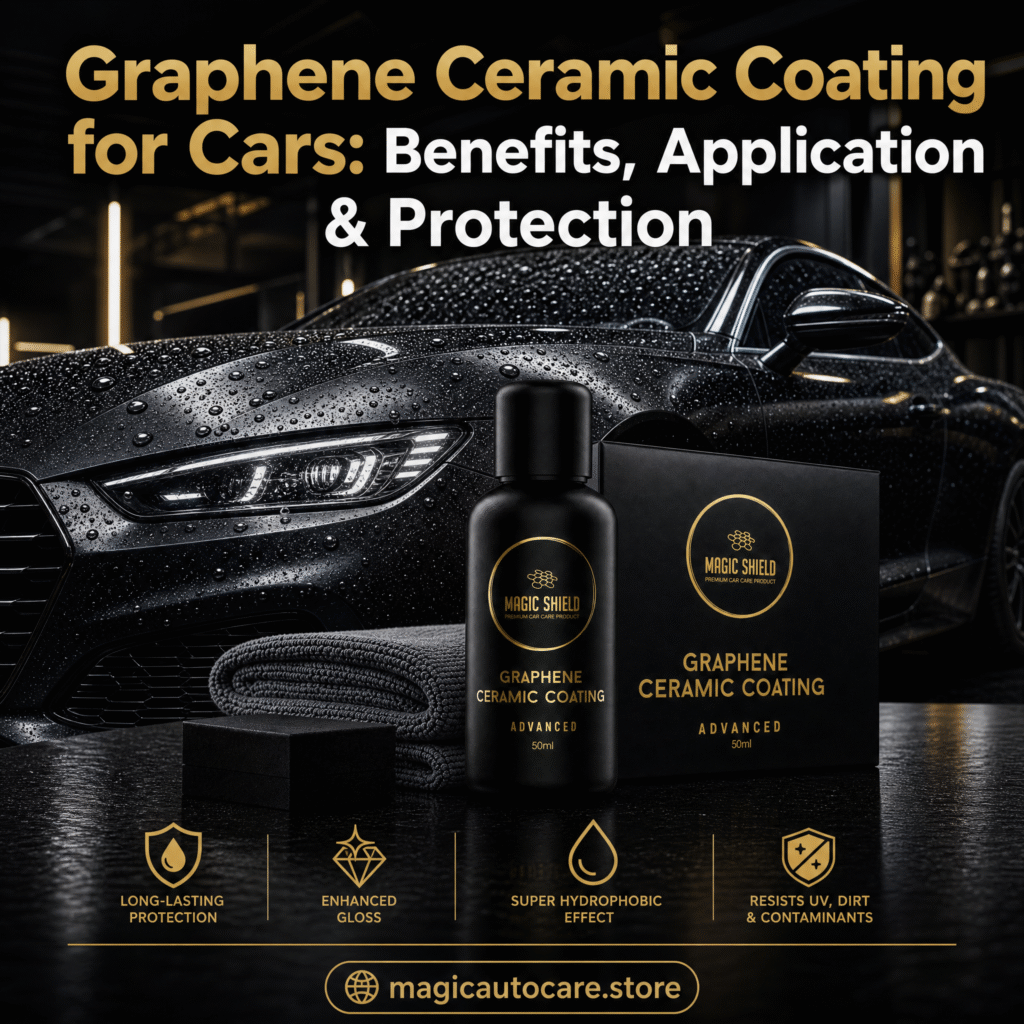
Now graphene ceramic coating takes that same concept and, adds graphene oxide into the mix. Graphene itself is a carbon form that’s usually described as thin flexible, and very good at moving heat, so the coating can spread heat more evenly. That matters because over time, pure ceramic layers can get those micro cracking issues. With graphene ceramic coating, the ceramic part brings hardness and chemical resistance, while the graphene part brings more give, better slickness , and a more balanced heat flow across the surface.
So for everyday car owners, the real world outcome is often it goes on a bit friendlier, it feels smoother on the touch, and grime , water, and road dust tend to let go easier than with a standard ceramic-only option like MagicAutoCare.store’s graphene ceramic coating for cars.
How does graphene ceramic coating actually work?
In real life it’s a bit more straightforward than people make it sound, basically it comes down to five stages and after that, you get the results most folks talk about:
Surface prep — first the car is washed and decontaminated so the coating can lock on to clean paint, not chase after a layer of residue.
Coating application — then the product is sprayed or wiped onto the paint, usually in smaller, more controlled sections.
Bonding with the paint surface — instead of just lying there like typical wax, the resins in the coating chemically connect with the clear coat.
Curing — the coating then hardens, but not instantly. it usually takes a few hours to several days depending on the product and the conditions.
Protective film formation — once it’s cured, a thin but tough film forms over the paint. that film becomes the new outer face where contaminants try to interact.
That cured film is the reason graphene coatings are famous for the hydrophobic effect. since the surface tension is pretty high, water doesn’t really want to lay down flat. it gathers into tight beads and rolls away, rather than spreading across the paint. and because of that same behavior, dirt, dust, and grime tend to latch on less easily , so rinsing the car afterward often feels noticeably easier.
Also, it’s good to keep expectations aligned because this layer does not magically make everything bulletproof. no spray-on graphene coating will make your car’s paint scratch-proof. it can improve resistance to light scratches and help with swirl marks, and it can make the surface better at handling everyday scuffs, but it’s still not a replacement for careful washing routines or paint protection film in zones where damage risk is higher.
Benefits of a Graphene Ceramic Coating for Cars
So, the glossy look gets turned up — the product smooths out the paint surface, and this makes reflections feel cleaner, more crisp. it also tends to add a deeper kind of color that stays noticeable.
Water just behaves differently. it becomes hydrophobic , so little beads form and then roll away, instead of spreading out as a sheet across the finish.
Day to day upkeep gets less annoying. when the surface has that coating layer, grime and dust tend to release sooner, so washing usually takes less time and less scrubbing, you know, the usual hassle drops.
There’s also real help for stuff in the environment. the coating works like a protective barrier against bird droppings, tree sap, and light road grime. that means you often get a bit more breathing room to wipe it off before it can disturb the clear coat.
UV related paint protection matters too. after it cures, the layer helps block UV exposure, which otherwise speeds up fading and oxidation as time goes on.
Another plus is reduced dirt buildup. with less surface friction, contamination has a harder time clinging between washes.
And yeah, the car ends up looking better for longer. after application, many vehicles maintain that “just detailed” appearance, without needing to redo everything all the time.
Long-term surface protection can be a big deal. if it’s applied correctly and you maintain it, a proper coating can last well past traditional wax, often for months and sometimes longer.
One more thing, the exact numbers—like real protection windows, or coverage per bottle—should come straight from the manufacturer’s own product page. general statements online can be misleading , because the formula and your maintenance routine change the outcome.
How to slap on a Graphene Ceramic Coating to your car
Wash the vehicle
First do a real, thorough wash to kick off loose dirt, dust, and that road stuff. If you coat over something dirty, you basically trap it under the finish, and it will look worse later. Also, rinse very well.
Decontaminate the paint
A normal wash takes off loose grime, but bonded contaminants like embedded brake dust particles dont just “move along.” Use a dedicated decontamination step, like an iron remover, to get the surface actually clean before bonding.
Correct the paint if needed
If you see swirl marks, light scratches, or oxidation, do a polishing step before you coat. That way the surface comes out smoother and glossier. Not always required, but it matters more on older or heavily worn paint.
Final surface prep
Right before applying the coating, make sure the paint is totally clean and no residue stays behind, from polish, wax , or any leftover cleaner. Even a tiny bit of leftover product can mess up proper bonding, so dont skip this part.
Apply the graphene ceramic coating
Do the work in smaller sections, like one panel at a time, or half a panel if you prefer. Work on a cool, shaded, dust-free area. Spread the coating evenly, then buff off the excess with a clean microfiber towel. You should remove it before it fully hazes over, otherwise it gets harder.
Let it cure
Curing time depends on conditions. If water, dust, or too much heat shows up early during the curing window, it can reduce how well the coating bonds and how it performs long term.
Important: For MagicAutoCare.store’s graphene ceramic coating, always use the manufacturer’s real application, dilution, and curing instructions shown on the product page, not general estimates , because those details change by formula and bottle size.
How Long Does Graphene Ceramic Coating Last?
There isn’t really one clean answer here—its staying power depends on a few things that kinda stack up. Like, the exact formulation of the specific product you bought, how well the surface was prepared beforehand, the actual quality of the application, and yeah your washing routine and the products you keep using. Also environment stuff matters, like sun, salt, humidity, and the general climate. Then there’s ongoing maintenance after the initial install , which honestly can be the difference between “great” and “why is it fading already”.
A coating that goes on top of properly prepped paint and gets maintained with coating-safe products tends to last longer, compared to a coating applied in a hurry over grime or contamination. For the exact protection window of a particular product, it’s best to check that product’s own page instead of leaning on broad industry claims that often sound the same.
How to Maintain a Graphene Ceramic Coating
Start with a coating-safe car shampoo, and if possible use a pH-neutral formula. A dedicated graphene shampoo usually helps, because it won’t strip the coating the way stronger degreasing washes sometimes do. Wash regularly, not when it’s already coated in dirt. Try to avoid abrasive cleaning methods, like dry wiping, or using rough sponges that feel “totally fine” but still scratch.
Also remove bird droppings, tree sap, and similar contaminants promptly. They can do real damage, like etching, even through a coated surface if left too long.
When washing and drying, use clean microfiber towels, so you don’t accidentally add swirl marks. And yes, follow the coating manufacturer’s maintenance instructions, because recommended wash intervals and product compatibility can vary from brand to brand.
Common Graphene Ceramic Coating Mistakes
Putting the coating onto dirty, contaminated paint
Skipping the decontamination step
Coating over heavy oxidation without fixing it first
Working in direct sunlight, or on a hot panel
Applying too much product at once, which can cause streaking
Ignoring the recommended curing time
Washing the vehicle before the coating has finished curing
Expecting the coating to block all scratches, instead of just reducing their chance
FAQs:
What is graphene ceramic coating for cars?
Graphene ceramic coating for cars is basically a liquid protective mix that uses ceramic resin plus graphene oxide, and then it bonds to the clear coat. The idea is you end up with this tough, shiny, hydrophobic type layer that kind of shields the paint from UV exposure, grime buildup, and those annoying water spot stains.
Is graphene ceramic coating better than regular ceramic coating?
It depends on what you care about most. Graphene ceramic coatings usually feel more slick, and they can be a little easier to live with during cleaning. Regular ceramic coatings, on the other hand, have a longer track record and very well documented results. So, no, there isn’t one universal “better,” it really comes down to the particular product and how you wash and maintain the car after.
How long does graphene ceramic coating last?
That part is not always the same. It depends on the formula, how properly the surface was prepped beforehand, how carefully it was applied, plus your wash routine and the environment it’s in. So to get the most realistic timeframe, you should always look at the manufacturer’s own product info.
Does graphene ceramic coating protect car paint from UV rays?
Yes. When it cures, it forms a barrier that helps protect the clear coat from UV exposure, which in turn can reduce fading and oxidation from long term sun time.
Does graphene ceramic coating make a car hydrophobic?
Yes, usually. After it cures, it changes the surface behavior so water beads tightly and then rolls away, instead of spreading out across the panel like a sheet.
Is graphene ceramic coating worth it?
For most drivers who want easier maintenance, a lasting glossy finish, and stronger paint protection than wax offers, yes. The value depends on proper surface prep and consistent maintenance afterward.
Can I apply graphene ceramic coating myself?
Yes, many spray-on graphene ceramic products are designed for DIY application. Success depends heavily on thorough washing, decontamination, and surface prep beforehand — the coating itself is usually the easiest part of the process.
How do I maintain graphene ceramic coating?
Wash regularly with a coating-safe, pH-neutral shampoo, use clean microfiber towels, avoid abrasive cleaning, and remove contaminants like bird droppings promptly to keep the coating performing well.