
Not sure how to apply nano ceramic coating? Start here.
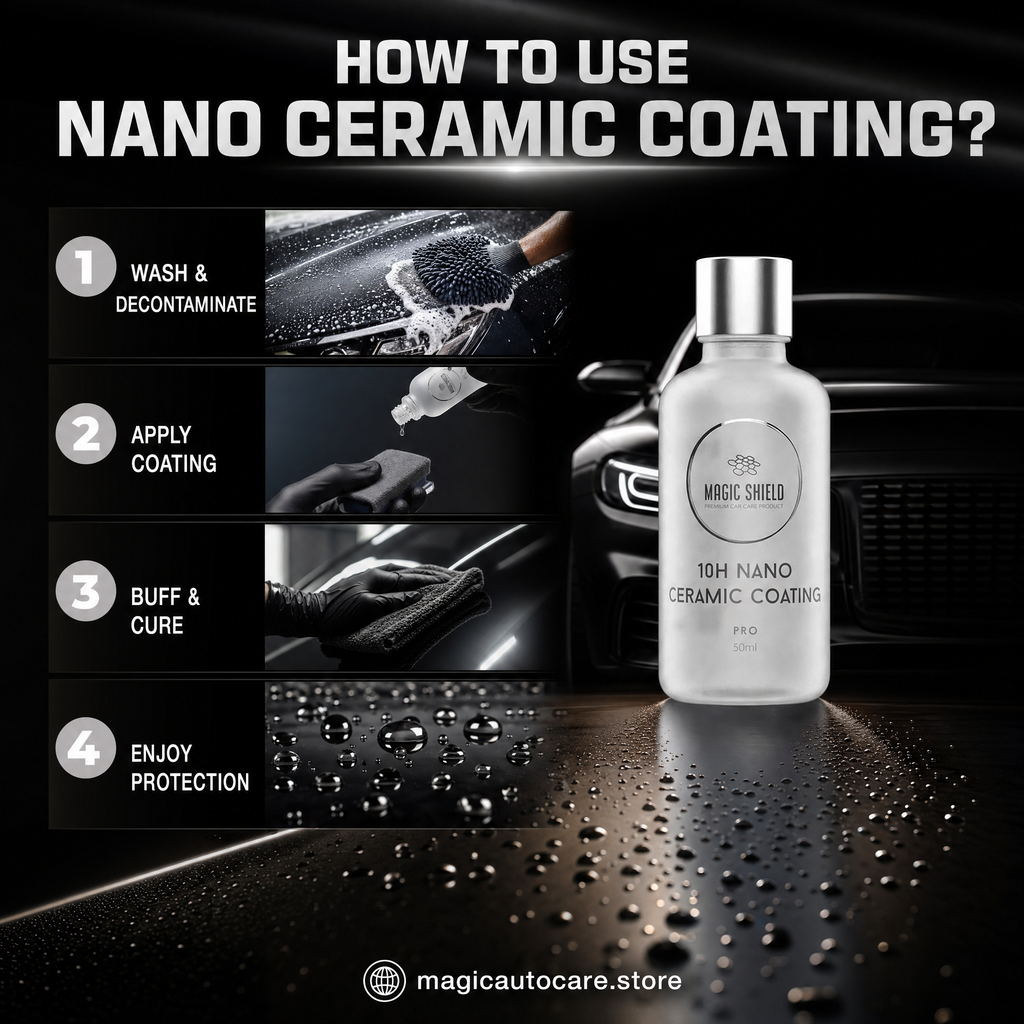
First, wash the car well. Then decontaminate the paint so it is clean. Next, take off any old wax or sealant you still have on the surface. How to Use Nano Ceramic Coating After that, work in small sections. Use a suede applicator to spread the coating. Keep an eye on the time and level off the excess while it is still workable.
Leave the car alone while it cures. Let it sit for at least 24 hours with no handling.
Do those steps in the right order and you should see a smooth, shiny finish. It will also feel easier to clean day to day. It is made to handle hot sun, rain, and the general wear you get on Australian roads.
Follow this guide from start to finish. It covers prep, application, curing, and what to do after. You can do it with less stress, even if you have never tried it before.
- Nano ceramic coating is a liquid polymer. It sticks to your car paint and forms a tough, shiny shield.
- What you do before coating is key. Washing, removing grime, and paint correction usually matter more than the product.
- Most coatings go on in one or two light coats. People often use a suede pad or a microfibre applicator.
- After you apply it, curing can take time. Expect 24 to 48 hours before the car gets wet. A full cure may take up to 7 days.
- In Australia, strong sun, heat, and airborne dust can beat up paint. That is why paint protection helps. Still, try to apply in shade and at mild temperatures.
- Magic Auto Care sells ceramic coating and other car care items made for Australian conditions. You can find them at magicautocare.store.
What Is Nano Ceramic Coating?
Nano ceramic coating is a liquid polymer. It is often made with silica. People apply it by hand on the car’s exterior paint. After it dries, it leaves behind a thin film. That film bonds with the clear coat.
Wax works differently. Wax mainly sits on the surface. It tends to fade after a few weeks. A ceramic coating is meant to link with the paint. When done right, the finish looks deeper and shinier. Water also tends to bead up and run away faster. The coating can also help with common grime, like road dust, bird droppings, and mild chemical splashes.
The name “nano” points to the particle size. The material uses tiny particles. Those particles can settle into small flaws in the paint. The result is a smoother look and better light reflection.
Ceramic coating does not replace care habits. It does not remove the need for washing. It is best seen as a protective layer. It helps routine paint protection feel easier over time.
What You Need Before Applying Nano Ceramic Coating
Start by getting the tools you need. If you rush or leave out a step here, ceramic coating work often fails.
Supplies for cleaning and prep
- pH-neutral car shampoo
- Clay bar or clay mitt
- Isopropyl alcohol (IPA) panel wipe solution, mixed to the right strength
- Two wash buckets, one for soap and one for rinse, or use a pressure washer
- A wash mitt and drying towels made from microfibre
- Automotive-safe degreaser, if you are doing the engine bay or wheels
Supplies for applying the coating
Strong lighting, like an LED work light or an inspection lamp
The nano ceramic coating product
Suede or microfibre applicator pads
Clean, lint-free microfibre cloths to buff
Nitrile gloves
Polishing compound and a dual action polisher, only if the paint needs correction.
Masking tape for trim, rubber seals, and any plastic panels.
Set everything out before you start. It helps the job run without stops, and it lowers the chance that the coating sets on the pad or dries unevenly on the surface.
How to Prepare Your Car for Nano Ceramic Coating
The work before you start matters most. Ceramic coating seals what is already on the paint. If the surface has swirl marks, dust, or leftover wax, that stays there. If you rush this part, the problem tends to show up later.
Clean the Car First
Use two buckets and a pH safe car shampoo. Wash until all loose dirt, grime, and the road haze are gone. Rinse well and handle the paint gently so you do not add fresh swirls.
Do a Clay Treatment
Use a clay bar or a clay mitt with a slip spray or lubricant. Move it over the paint in straight passes. This pulls out stuck stuff like brake dust, tar marks, and fallout that regular washing misses. You will notice the surface turning from rough feeling to smooth.
Strip Leftover Protectants
Wipe the whole car with an IPA panel wipe. This removes wax, sealant, and leftover polish oils. If you skip this, the ceramic coating will not grip the paint as it should.
Polish Only If You Must
Should you polish before a ceramic coating? If you see swirl marks, fine scratches, or oxidation, then yes. Ceramic coating will not cover those flaws. It seals what is already there. Most daily cars only need one polishing step, but cars you want to look show level may need more than one stage.
Last wipe
After you finish polishing, wipe the surface with IPA one more time. This helps take off any leftover polish. Make sure the paint is fully clean and bare before you open the coating bottle.
How to Use Nano Ceramic Coating Step by Step
Prepare the vehicle first, then apply nano ceramic coating this way.
Pick the right place to work. Use shade and keep dust away. A garage or a covered carport works well. Do not coat in direct sun. Also avoid days that are very hot or very damp, since that can change how the product levels and sets.
Do the job in small parts. Split the car into sections. Start with one door. Then move to the bonnet. After that, coat the side guard. If you try to cover everything at once, you can end up with an uneven finish.
Use only a little product. Put a few drops on a suede or microfibre pad. You usually need less, not more.
Cover the surface evenly. Move the pad in straight passes. Slightly overlap each pass. Use light pressure that stays the same the whole time.
Wait for it to flash. Let the coating sit for about 1 to 3 minutes. Follow the directions on your bottle. You want a faint haze to start to appear.
Remove the extra. Take a fresh, dry microfibre cloth. Buff the panel gently. Focus on clearing high areas and any remaining haze. The goal is a clear, even, shiny layer.
Check your work in good light. Look at each section from more than one angle. Search for streaks or spots you may have missed before you move on.
If you plan a second coat, do it the same way. Use the same steps. Respect the flash time listed by the product between coats.
Let the car sit while it cures. Do not touch the panels. Do not drive the car right away after you finish each coat.
Doing the coating section by section, and not rushing the whole car, helps you get a more even and streak-free result.
How Many Coats of Nano Ceramic Coating Should You Apply?
Nano ceramic coatings usually work well with one or two layers. With just one coat, many people get solid protection and a nice shine. A second coat, if applied thinly, can give a bit more depth and may last a little longer. Going past two coats often does not help much. It can also raise the chance of high spots and a finish that looks patchy. Follow the directions for your exact product. Do not assume that more coats will always be better.
Common Mistakes to Avoid
Many car owners make the same errors, even when they try to be careful.
First, using too much product. A thick coat does not equal more protection. It often leaves streaks, foggy areas, or uneven spots. Once it sets, it is tough to fix.
Second, applying in direct sun. Warm light makes the coating set fast. It can cure before you can smooth it out and buff it evenly.
Third, skipping the prep step. If you coat over dust, tar, or leftover wax, you trap the flaws under the new layer. Then the paint may bond in a patchy way.
Fourth, waiting too long to buff. If the coating stays on for too long, removing extra product gets harder. You may also see residue lines or marks.
Fifth, touching the car too soon. During the curing period, fingerprints can show. Water spots and stray dust can also land on the surface and stay in the final look.
Sixth, ignoring the label directions. Flash time, the number of layers, and cure windows differ by brand. Read the instructions for the exact coating you are using.
How Long Does Nano Ceramic Coating Take to Cure?
After you apply nano ceramic coating, wait about 24 to 48 hours before you let the car get wet. Even then, the coating still needs time to finish curing. It can take roughly 5 to 7 days to fully harden.
During that early window, park it in the garage if you can. Try not to drive in rainy weather. Also, avoid washing the car until the curing time is done.
In most cases, water beading and the strong slick feel start to show more clearly after the first week. Waiting through that period helps the coating perform better later.
How to Maintain Your Car After Applying Nano Ceramic Coating
Ceramic coating cuts down on work, but it still needs routine upkeep. If you want the paint to stay sharp, follow these steps:
Wash often. Use a pH-neutral shampoo and the two-bucket approach. Aim for about once every 1 to 2 weeks.
Skip drive-through washes. Some of them use rough brushes, and those can leave tiny marks that build up.
Add a ceramic-safe spray or a top-up product every few months. This helps keep the shine and the water-beading effect.
After washing, dry the car well. Use a clean microfibre towel or a proper drying aid. Do not just let it air dry.
Clean spots fast when they show up. Bird mess, tree sap, and bug residue come off easier early on. Still, do not leave them on for long.
Keeping up with routine care helps a ceramic-coated car stay glossy. It also helps the coating work the way it should as the months go by.
Is Nano Ceramic Coating Suitable for Australian Conditions?
Nano ceramic coating can work well in Australia. Still, you have to match the job to local weather and road habits. Australia gets intense sun, lots of heat, and plenty of dust. Those factors can harm car paint. At the same time, they are the same factors that make coating protection worthwhile. The key is timing and where you apply it.
In parts of Australia, UV is brutal. Strong sunlight can wear down paint and harm clear coats over time. A ceramic coating helps slow that damage. Put it on in shade, not under direct sun. Also, do it on a mild day. Avoid applying it during a heatwave.
Dust is another big issue. If you drive often on dirt roads, unsealed roads, or rural tracks, grime can cling fast. With a ceramic coat, it is usually easier to rinse off dust and dirt. Less stays stuck to the paint.
Near the coast, salt air can be a problem. Humidity also plays a role on exposed metal and paint. When the coating is in good shape, salt residue rinses off more easily.
Rain can be sudden in many areas. Ceramic coatings make water act differently on the surface. Water tends to bead and run off faster. That can help when storms hit without much warning.
So, for many Australian drivers, nano ceramic coating is a solid fit. Just apply it in a shaded spot, and try to work in a controlled temperature environment.
Why Choose Magic Auto Care?
Magic Auto Care makes car cleaning and paint protection items that are simple to use. They are built for real roads and real weather. This includes the tough side of the Australian climate.
People who want to put a nano ceramic coat on at home can shop the range at magicautocare.store. The selection covers the full process. You can start with wash and decontamination products. Then you move to the coating step. After that, there are sprays for upkeep.
The aim is to help you get results that look like a professional job. The steps are explained in a clear way. The products also fit different experience levels.
If you want car care that suits everyday use and still feels reliable, have a look at Magic Auto Care at magicautocare.store. It works well for first time coatings and for refreshing a coat you already applied.
FAQ’s
What is the process for nano ceramic coating?
First, wash the car and remove contamination. Next, wipe the paint with an IPA solution to take off old wax. Then, work the coating onto the surface in small areas with a suede pad. After that, wipe off the extra before it hardens too much, so the finish stays clean.
What should you do before you apply nano ceramic coating?
Start with a thorough wash. After the wash, use a clay bar to pull out embedded dirt. If you can see swirls or scratches, polish those spots first. Finish with an IPA wipe to leave the paint bare and ready for the coating.
How many layers of nano ceramic coating do you need?
Many coatings work well with one or two coats. Still, follow the directions from the brand you bought, since each product can be different.
How long does nano ceramic coating take to cure?
In most cases, you should wait about one to two days before the car gets wet. Full curing can take about five to seven days. The exact time depends on the product and the weather.
Can someone new apply nano ceramic coating?
Yes, beginners can do it. Just focus on prep, use the right supplies, and apply it slowly in small sections. Spending more time on prep usually matters more than past experience.
What happens if ceramic coating is applied incorrectly?
If ceramic coating is applied badly, it can show lines, bumps, patches of uneven gloss, or flat dull areas. After it hardens, those problems are tough to fix.
How long does nano ceramic coating last?
The lifespan of a nano ceramic layer depends on the exact product, the way it was layered, and how you treat the car later. To get the most accurate estimate, read the label and stick to the care steps it lists.
Can you put nano ceramic coating on in Australia during hot weather?
Yes, but try to work in shade. Pick a milder day. If it is too hot or in strong sun, the coating can flash off too quickly. Then it may not smooth out well.
Should you polish before you apply nano ceramic coating?
If you already have swirl marks, light scratches, or signs of oxidation, polish first. The coating will seal in the surface. It does not erase those issues on its own.
What should you do after you apply nano ceramic coating?
Wash the car often with a shampoo that is pH balanced. Avoid stiff brushes and rough drive through washes. Dry the car well each time. Also use a ceramic safe spray or gel from time to time to keep the gloss and help water bead away.